Goals

The main goal of our project is to show that the road from recipes to experiments was long, complex and fascinating; with stops and turns that needs investigating. The starting point of the road was the recipe format and the books of secrets. At the end we can find “experimental reports.” But what is really fascinating is what lies in between. Our investigation focus on the intermediate forms of recordings but also inquires into the process of disambiguation through which tacit knowledge embodied in the recipes was gradually spelled out, tried, tested, reformulated and transformed. We call this process “enactment”.

Definitions

Enactment is a process of progressive disambiguation of tacit knowledge encoded in a recipe. It is a complex process which includes a number of components. There is, first, the reading and the understanding of a recipe, a gradual process, extremely context-dependent. Then, enactment presupposes imagining experimental set-ups, imagining ways to spell out the tacit knowledge embodied in the recipes, imagining ways of “improving” the recipe, devising the trial and assessing the result, changing and adapting the material conditions, introducing new elements, devising material and conceptual instruments to tackle the phenomenon under investigation. Thus, enacting a recipe has a creative component, it exercises both the imagination and the judgment of the reader (and of the experimenter), it tests the expertise of the actor performing it and it is, therefore, highly context-dependent.

In order to enact a recipe, the reader has to recover some of the tacit knowledge embodied in it. In fact, recipes contain several layers of secrets. In some cases the secret unfolds only to those with a special training; in other cases, the secret is revealed in the process of enactment; finally, in other cases it lies in the result. Furthermore, enacting recipes is something which depends on and varies according to the skills, the knowledge and the training of the reader. Nonetheless, it will take the  reader/enactor/experimenter to execute the instructions of the recipe again and again in order to establish causal correlations, eliminate, as much as possible, the sources of error, stabilize the entire process, and ensure the repeatability and predictability of the results.

Our claim is that through enactment, early modern investigators of nature transformed received recipes into two different kinds of products, with different functions in the structures of knowledge. One of these products is what we call “technology.”

We take “technology” to be descriptive for a particular kind of enacting and recording recipes in view of producing new (and sometimes miraculous) objects. This led to experimentation of a particular kind: experimentation directed towards spelling out the tacit knowledge embodied in the recipe, clarifying the desired result, stabilize the procedure of enactment so that the result would be obtained at each trial and – most importantly – find ways of recording that would make the technology transparent to the reader. We intend to investigate several such early modern technologies (of cider making, of distillation, of sounds, etc.). We will show that they are not scientific experiments; in fact, technologies are the very opposite of scientific experiments. By contrast to scientific experimentation, which also began with recipes and enactment, but in the process of enactment several open-ended questions directed the inquiry away from the envisaged result of the recipe (such as “why” and “how”), technologies encapsulate and codify practical knowledge; and sometimes they also produce theoretical knowledge; but it is a particular kind of applied knowledge, knowledge with expected results.

Goals and activities

A key goal of our project is to define and exemplify forms and strategies of enacting recipes in early modern philosophy and the sciences. We intend to investigate a large corpus of texts belonging to different early modern disciplines in an attempt to unveil and clarify the successive steps of enacting recipes in particular experimental contexts (the corpus contains works by Francis Bacon, William Gilbert, Hugh Platt, Thomas Browne, John Barlow, Henry Power, John Evelyn, Kenelm Digby and Robert Boyle). We aim to clarify and classify  forms and strategies of enactment and introduce this subject into the current discussions in both history and philosophy of science and we will do that by bridging the gaps between textual analysis of records, material practices, and reconstructions.

Talks

2023

Dana Jalobeanu, A Baconian Science of Sounds: Marin Mersennes’ Echometry, International Conference in Continental Empiricism in Early Modern Period, Bruxelles, 17-18 January 2023

Dana Jalobeanu, The Cartesianism of Henry Power, Symposium on the celebration of 30 years from the publication of Daniel Garber’s Descartes’ Metaphysical Physics, Duke University, 26-27 March 2023 (online)

Dana Jalobeanu, The Fable of Science: Francis Bacon’s Solomon’s House and its European Reception, talk at the Hamburg Institute of Advanced Studies, 23 March 2023

Dana Jalobeanu, Democritus, Descartes, and the origin of experimental science, in the Recipe seminar, 24 March 2023.

Dana Jalobeanu, Manipulating spontaneous generation: Microscopy and artificial life in the seventeenth century, The Recipe seminar, 26 May 2023.

Dana Jalobeanu, What are the experiments for? Cartesian Baconians and the construction of hypotheses in the mid-seventeenth century, invited talk in the philosophy seminar, University of Hamburg, 31 May 2023.

Dana Jalobeanu, Francis Bacon on perception, sense and body-body interaction, Scientiae 2023, Prague, 9-11 June 2023

Dana Jalobeanu, Reconstructing Bacon: philosophical premises of several editions, Workshop: Which context? Reflections on contextualism(s) in history of philosophy and the sciences, HIAS, Hamburg, 27-29 June 2023

Dana Jalobeanu, Francis Bacon’s World of Sciences, at the Early Modern Knowledge from the Library to the Laboratory. Recipes, Experiments, Doctrines, Institutions. The Princeton-Bucharest Conference in Early Modern Philosophy, Alba Iulia, 3-7 July 2023

Dana Jalobeanu, Francis Bacon’s Democritus: fictionalism and history of philosophy, invited plenary talk in the History of Philosophy section, European Congress of Analytic Philosophy, CEU, Viena, 21-25 August, 2023

Dana Jalobeanu, Transmutation in the Sylva Sylvarum, International Colloquium on Francis Bacon, Nancy, 27-29 September 2023

Dana Jalobeanu, Recipes, experiments and Francis Bacon’s physics of processes. The case of the Sylva Sylvarum, Workshop on Recipes, technologies and experiments in Francis Bacon’s Sylva Sylvarum, ICUB-Humanities, 13 Octomber 2023

Dana Jalobeanu, Recipes, experiments and Francis Bacon’s physics of processes. The case of the Sylva Sylvarum, invited conference at Star UB, Babes Bolyai University, Cluj, October 19, 2023.

Dana Jalobeanu, Philosophical premises of Bacon’s editions, The annual meeting of the Oxford Francis Bacon, Queen Mary University, London, 10-11 November 2023.

Grigore Vida, “Democritus, Descartes, and the Origins of Experimental Science,” at the Recipes, Technologies and Experiments Seminar  (Hamburg Institute for Advanced Studies; ICUB–Humanities) (together with Dana Jalobeanu), 24 March 2023.

Grigore Vida, “Samuel Clarke and Cartesianism,” at Scientiae: Disciplines of Knowing in the Early Modern World (Prague), 09 June 2023.

Grigore Vida, “From Abdera to Alkmaar: Biographical Reconstructions of Descartes as Democritus redivivus,”   at   the  Recipes, Technologies and Experiments Seminar (Hamburg Institute for Advanced Studies), 16 June 2023.

Grigore Vida, Reading-group “Merchants of Light: Experimental Philosophers and their Libraries,” at the Early Modern Knowledge from the Library to the Laboratory. Recipes, Experiments, Doctrines, Institutions. The Princeton-Bucharest Conference in Early Modern Philosophy  (Alba-Iulia) (together with Daniel Garber, Dana Jalobeanu, and Oana Matei), 04 July 2023.

Grigore Vida, Reading-group „Francis Bacon, The Wisdom of the (Early) Moderns,” at the Early Modern Knowledge from the Library to the Laboratory. Recipes, Experiments, Doctrines, Institutions. The Princeton-Bucharest Conference in Early Modern Philosophy (Alba-Iulia) (together with Cornelis Schilt), 06 July 2023.

Oana Matei, prezentare in cadrul seminarului de proiect: Atoms and the generation of plants in early modern natural philosophy, 07 April 2023

Oana Matei, Henry Power on the Palingenesis of Plants, th the Early Modern Knowledge from the Library to the Laboratory. Recipes, Experiments, Doctrines, Institutions. The Princeton-Bucharest Conference in Early Modern Philosophy, 4-6 July 2023.

Oana Matei, The reception of Bacon’s experiments with plants in the second part of the 17th century England, «Démesure ou sobriété ? Nouvelles approches de la conception moderne delanature», Université de Lorraine et Archives Poincaré, Nancy, 26-27 Septembre 2023.

Oana Matei, The reception of Bacon’s experiments with plants in the second part of the 17th century England, From recipes and experiments to the investigation of forms: the case of Bacon’s induction, ICUB-SSU, Bucharest, 13 October 2023

Alexandru Liciu, ‘Robert Hooke’s Science of “Petrifaction” and the Accademia dei Lincei’, at Scientiae. Disciplines of Knowing in the Early Modern World conference, Prague, Czech Republic, 7-10 June 2023.

Alexandru Liciu, ‘Robert Hooke’s Science of “Petrifaction” and its European Context’, at the Which Context?Reflections on contextualism in history of philosophy and the sciences workshop, HIAS (Hamburg Institute for Advanced Studies), Hamburg, Germany, 27-28 June 2023.

Alexandru Liciu, ‘Robert Hooke’s Science of “Petrifaction” and its European Sources’, at the Early Modern Knowledge from the Library to the Laboratory. Recipes, Experiments, Doctrines, Institutions. The Princeton-Bucharest Conference in Early Modern Philosophy, Alba Iulia, Romania, 4-6 July 2023.

Alexandru Liciu, ‘Robert Hooke’s Science of ”Petrifaction” and the Accademia dei Lincei’, at the Centre for the History of Science, Technology and Medicine (CHSTM) Postgrad Seminar, University of Manchester, 17 October 2023, online.

2022

Dana Jalobeanu, Bacon’s induction and the construction of “science”, Proof in Early Modern Philosophy, Prague 19-21 mai 2022 (online) Proof in Natural Philosophy. Between Antiquity and the Early Modern Period – Institute of Philosohpy AS CR (cas.cz).

Dana Jalobeanu, Francis Bacon on axioms, laws, rules and principle: an investigation into the aggregation of a scientific vocabulary, International colloquium on Axioms in Early Modern World organized by Vincenzo de Risi, Laboratoire SPHERE, Universite Diderot, Paris, 13 June 2022.

Dana Jalobeanu, Enacting recipes and the emergence of experiment: transformations of the recipe format in Della Porta’ Magia naturalis, international conference New Perspectives on Giovan Battista della Porta, Warburg Institute, University of London, 23 June 2022 (online) Rethinking Natural Magic: New Perspectives on Giambattista Della Porta | The Warburg Institute (sas.ac.uk).

Dana Jalobeanu, The Novum Organum as a system of practice(s), international conference, New and Old Organons, Universite de Sorbonne, Paris, 27-29 June 2022 , Anciens et nouveaux organons. Techniques de savoir entre XVIe et XVIIe siècles | UMR 8103 – ISJPS (pantheonsorbonne.fr).

Dana Jalobeanu, The fictional politics of scientific collaboration: Solomon Houses in Early Modern Europe, plenary talk at ESHS 2022, Bruxelles, September 2022, Plenary Lectures – Programme » ESHS Brussels 2022

Dana Jalobeanu, Bubbles, bladders and the ‘folds of matter’: enactment and concept formation from Bacon to Boyle, ESHS Conference, Brussels, 07-10 September 2020. Organized panel: Recipes, experiments, and the interplay between practice and concept-formation in early modern philosophy.

Dana Jalobeanu, Reflections on paradigm-shifts: vitalism, mechanism and experimental philosophy, at the International Conference On the Objectivity of Scientific Knowledge. Models and Theoretical Representations of Structure and Progress in Science. Thomas Kuhn’s Legacy, organized by the Institute of Philosophy of the Romanian Academy, 29 September-3 October 2022.

Dana Jalobeanu, Constructing Baconian Science: Henry Power’s ‘Experimental Philosophy’, at the Recipes, Experiment and the New Language(s) of Natural Philosophy in Early Modern Europe. The Princeton Bucharest Conference in Early Modern Philosophy, ICUB-Humanities, 14-15 October 2022.

Dana Jalobeanu, Henry Power’s Baconian Science of Life, in the international colloquium, The Anatomy of Vegetation, Organized at the Western University Vasile Goldiș; by Oana Matei, 10-11 November 2022.

Dana Jalobeanu, Cartesianism, Baconianism and the new science: Henry Power’s Experimental Philosophy, invited talk at the CEU University, Vienna, 15 November 2022.

Dana Jalobeanu, The shifting tides of Baconianism: a history (and philosophy) of historiographic categories, conference KUHN 100 organized by the Department of Theoretical Philosophy and CELFIS, 18-19 November 2022 (online)

Dana Jalobeanu, Henry Power’s manuscripts and the making of the Experimental philosophy, Princeton Bucharest Seminar in Early Modern Philosophy, 22 November 2022 (online) (2) Henry Power’s Experimental Philosophy (PBVS 69) – YouTube

Oana Matei, Building and Early Modern Science of Vegetation: Nehemiah Grew’s Inquiries into the ‘Anatomy of Plants’, at The Making of the Anatomy of Plants, 4A LAB Berlin, 09-10 March 2022 (online).

Oana Matei, Building and Early Modern Science of Vegetation: Nehemiah Grew’s Inquiries into the ‘Anatomy of Plants’, at the Rethinking the Constituents of Early Modern Science, University of Bucharest, 12 May 2022.

Oana Matei, Vegetation, Fermentation. and Digestion. Nehemiah Grew’s Conceptual Vocabulary in ‘The Anatomy of Plants’, ESHS Conference, Brussels, 07-10 September 2022. Organized panel: Recipes, experiments, and the interplay between practice and concept-formation in early modern philosophy.

Oana Matei, Henry Power’s Observations on Plants, at the Recipes, Experiment and the New Language(s) of Natural Philosophy in Early Modern Europe. The Princeton Bucharest Conference in Early Modern Philosophy, ICUB-Humanities, 14-15 October 2022.

Oana Matei, Corpuscles and Spiritual Matter: Henry Power’s Observations on Plants in the Experimental Philosophy, Henry Power’s Experimental Philosophy (PBVS 69) – YouTube

Alexandru Liciu, Was Robert Hooke a World Maker? On the Use of Collecting for the Making of History, Postgraduate Research Day, Faculty of History, University of Cambridge, 21 April 2022.

Alexandru Liciu, Robert Hooke’s Science of ‘Petrifaction’ and the Accademia dei Lincei, at the 9th Edition of the Bucharest Graduate Conference in Early Modern Philosophy, ICUB-Humanities, 15-16 October 2022.

2021

Dana Jalobeanu, Burning glasses from magic to science: the anatomy of a turning point, invited talk in the weekly seminar of the Department of Theoretical Science/CELFIS, 22 november 2021

Dana Jalobeanu, The „Missing Results” of Bacon’s tables: Or Reading the Novum organum in context, international colloquium Recipes transformed, 18-19 and 26 November 2021.

Dana Jalobeanu, “Whose practice? Francis Bacon’s rules of experientia literata in context”, at the Thomas Harriot in Global and Local Contexts: A Quatercentenary Conference, The Thomas Harriot Seminar and The Warburg Institute, 16 September 2021, online. More info here;

Dana Jalobeanu, ”Emblems as Epistemic Tools and Heuristic Devices: An Exercise on Perspectival Contextualism”, at the Histories of Science and the Humanities conference, European Society for the History of Science and The Research Centre of the Humanities, the National and Kapodistrian University of Athens, 23 September 2021, online. More info here;

Dana Jalobeanu, “Francis Bacon on instruments of detection and instruments of measure”, at the Promises of Precision – Questioning ‘Precision’ in Precision Instruments workshop, Mathematisch-Physikalischer Salon, Staatliche Kunstsammlungen Dresden, 29-30 September 2021, online.

Dana Jalobeanu, Experimenting with artificial life. Francis Bacon on the Historia de animato et inanimato, British Society for the Philosophy of Science, June 2021

Dana Jalobeanu, Bubbles, bladders and the “folds of matter”: on the interplay between experimentation and metaphysics in Baconian natural and experimental histories, The research seminar of CELFIS & Department of Theoretical Philosophy, University of Bucharest, 17 May 2021

Oana Matei, ‘Plants as Instruments of Knowledge in Early Modern Natural Philosophy’, Faculty of Sciences of the University of Lisbon, Seminario de Formacao Avancada em Jardins, Peisagens e Ambiente, 26 February 2021 (invited speaker).

Oana Matei, “Particles and Spirits: Fundamental Processes of Nature in Mid-Seventeenth Century Studies of Plants,” Plants in Early Modern Knowledge: History, Philosophy, and Medicine, Center for Renaissance and Early Modern Thought, Ca’Foscari University, Venice, 28.04.2021, 17:30-19:30. Session organized on Zoom.

Oana Matei, Fabrizio Baldassarri, “Plants in Early Modern Natural Philosophy: Mechanico/Chymical Investigations,” Princeton Bucharest Seminar in Early Modern Philosophy, 04.05.2021, 20:00-22:00. Session organized on Zoom.

Oana Matei, Building an Early Modern Science of Vegetation: Nehemiah Grew’s Inquiries into the ‘Anatomy of Plants’, international colloquium Recipes transformed, 18-19 and 26 November 2021.

Alexandru Liciu, John Woodward’s ‘Test’ of Observation and the Issue of Civil History, international colloquium Recipes transformed, 18-19 and 26 November 2021.

2020

Dana Jalobeanu, Baconianism and Newtonianism: a history (and philosophy) of shifting historiographic categories, plenary talk as invited speaker at the Panhellenic Conference in Philosophy of Science, December 2020. You can listen to a version of this talk here (given at the Annual Workshop of Philosophy of Science, University of Bergen, November 2019). Online.
Leibniz despre formarea principiilor, arta descoperirii și teoria științei- discuție de seminar

În acest seminar, vom analiza un fragment din Leibniz, Noi eseuri asupra intelectului omenesc. Textul are forma unui dialog. Unul din personaje, Philaletes, ne prezintă în mod aproximativ pozițiile pe care le adoptă Locke în  Eseu asupra intelectului omenesc, iar Teofil este vocea critică a unui Leibniz ce vrea de fapt să construiească pornind de la concepțiile lui Locke. Noile eseuri acoperă tematici diverse, de la atributele materiei la posibilitatea miracolelor.

Însă noi ne vom ocupa de o discuție recapitulativă despre principii, arta descoperirii și teoria științei. Mai jos găsiți ce am înțeles eu din text.

Philaletes 1: Principiile sunt baza cunoașterii, iar științele sunt construite pornind de la principii cunoscute (matematica e un exemplu). Însă problema e că par să fie două tipuri de principii: unele necesare și universale, iar altele provenite din cunoașterea empirică a particularului. De exemplu, alfăm că corpul nostru este mai mare decât un deget nu în baza principiului universal că ”întregul este mai mare decât partea”, ci pornind de la cercetarea empirică a propriului nostru corp (ceea ce însemană, evident, cercetarea unui particular).

Însă întrebarea e dacă nu e cumva mai degrabă procesul de gândire (”connection of ideas”) cel care ne ajută să construim știința, și nu principiile de la care pornim.

Teofil 1: Este adevărat că formularea de propoziții universale ne ”ușurează” memoria (de pildă, nu e nevoie să demonstrăm o teoremă de mai multe ori etc.). Însă propozițiile universale nu apar direct din cercetarea empirică, pentru că aceasta are de-a face doar cu particulare (e asemenea problemei bazei empirice, de care am vorbit semestrul trecut). Dar uneori se pare că avem principii universale din care derivăm cunoaștere despre particulare, însă aceste principii, din nou, nu provin din surse empirice. Rezultă că aceste principii sunt apriori și că există în mințile fiecăruia dintre noi.

Phil 2: Nu sunt aceste principii apriori de fapt asumpții? Ce ne garantează că nu acceptăm de fapt asumpții nejustifcate (deghizate în principii corecte)? Cum știm că principiile pe care le avem sunt certe? Certitudine vine doar din ”comparison of ideas” (din nou. Să discutăm ce înseamnă termenul).

Teofil 2: Ne referim la principii adevărate, nu la principii acceptate în mod arbitrar (nici măcar Aristotel nu obținea principii în mod arbitrar). De fapt, și principiile cu un grad mai mic de certitudine sunt ok, pentru că ne permit să construim cunoaștere ipotetică (numai că trebuie să nu luăm cunoaștere ipotetică drept cunoaștere certă). Uneori cunoașterea ipotetică poate fi verificată dacă inferențele (numeroase) obținute din principii doar probabile sunt deja cunoscute pornind de la alte principii, certe (de discutat. Ce formă logică am avea aici?).

Euclid nu a reușit să ofere o definiție a dreptei (pentru că nu a găsit una ferită de imaginație, care s-ar baza pe experiență și prin urmare ar fi neadecvată) , ci a folosit două axiome pentru a o descrie. De fapt, știința nu se poate consturi din asocieri și comparații de idei (”agreement and disagreement of ideas”), ci are nevoie de demonstrații (poate cu excepția geometriei practice provizorii). Mai mult decât atât, știința (geometria, de exemplu) servește și drept un fel de medicină a minții, pentru că e un model de gândire corectă (incertitudinea omaginației vs. certitudinea demonstrației). Ba chiar mai mult, geometria se ocupă cu contemplarea adevărurilor eterne și necesare (prin opoziție cu ideile empirice confuze). Peisajul e de fapt ceva mai fine grained: Euclid a acceptat și unele axiome provenite din imaginație, însă a fost atent să le separe de cele certe. Cumva tot e mai bine decât ca geometria să nu fi progresat deloc. 

Phil 3: Începe să înțeleagă de ce cercetarea trebuie modelată după exemplul matematicianului. Poate am putea construi și morala după acelați model.

Teo 3: Într-adevăr.

Phil 4: Însă cunoașterea substanțelor pare a fi de alt tip, pentru că pornește de le experiență. În acest caz, chiar dacă avem intelectul antrenat de modelul matematicienilor, tot n-am putea obține decât cunoaștere probabilă. Așa că se pare că filosofia naturală nu poate deveni știință (tot ce putem face e să tragem niște foloase practice de pe urma istoriilor naturale).

Teo 4: Într-adevăr, nu putem spune că toate subdisciplinele filosofiei naturale vor fi științe. Însă unele sunte, precum știința magneților (dintr-un număr mic de principii obținute din experiență putem explica, dar și prezice, fenoneme? ”from a few assumotions grounded in experience we can demonstrate by rigurous inference a large number of phenomena which do in fact occur in the way we see to be implied by reason”. De discutat).

Phil 5: Atunci morala este o știință  (mai curând decât filosofia naurală). Însă dacă am putea construi știința după modelul discutat aici, am obține și beneficii practice mult mai mari decât cele pe care le avem acum.

Teo 5: Într-adevăr.

Phil 6: Ce ne facem cu ipotezele probabile? Mintea noastră are tendița să generalizeze prea repede.

Teo 6: Arta Descoperirii este asemenea descifrării: uneori avem nevoie și de noroc (”an inspired guess often provides a generous shortcut”). Doar că tot ne mai trebuie și o artă a experimentării (”art of using experiments). Cam așa ceva, dar nu sunt deloc sigur pe interpretarea asta. Voi ce interpretări aveți?

Interesant: Boyle este criticat pentru că ar fi obținut principiul mecanicizării naturii din experimente. Pentru Leibniz, certitudinea acestui principiu poate fi garantată doar apriori (? ”by reason alone”) și nu printr-o artă a experimentrăii.

Phil 7: Chiar dacă am ajuns la idei clare și distincte, încă mai avem de descoperit ideile intermediare, care ne vor ajuta să comparăm primul set de idei. Problema e că ideile intermediare nu vor fi furnizate de către principii.

Teo 7: Axiomele se folosesc, de fapt, pentru a conecta idei (?). Un exemplu cu squaring the circle.

Întrebări de avut în vedere:

1.         Cum arată teoria științei pentru Leibniz? Cum ar arăta ”an ultimate analysis” despre care vorbește Teophil? 

2.         Care sunt diferențele (dar și asemănările) dintre matematici și științele empirice?

3.         Cum obținem principiile?

4.         Ce este ”the comparison of ideas”?

5.         Ce este ”the art of using experiments”?

6.         Cum arată arta descoperirii?

Early modern “technologies”: some preliminary clarifications

Our claim is that enactment is the mechanism behind the transformation of early modern recipes. But we also claim that this was a complex transformation which did not lead in a straightforward or univocal way to scientific experiments. Sometimes, enacting recipes resulted in something different altogether, sometimes we are going to call “technology” (Jalobeanu 2016, Jalobeanu and Matei 2020). This term is not an actor’s category, but a useful historiographic tool.

We take “technology” to be descriptive for a particular class of enacting and recording recipes directed towards the production of new (useful or miraculous) objects. Technologies are interlinked with claims of expertise and with particular kinds of enactment. The experimenter constructing a technology is interested in spelling out the tacit knowledge embodied in a recipe in a way that would allow him to control the result, and to “stabilize” the procedure of enactment in so far it always yields the same result.

Recording technologies also has specific features; unlike recipes, they are much more “transparent” to the reader. They can circulate easier and get easily adopted to other contexts. In this project we intend to investigate a number of early modern technologies. We propose to work with quite diverse examples of technologies of grafting, vegetation and fermentation on the one hand, distillation and separation (including desalinization) on the other; showing how much they differ (and why) from scientific experiments.

What we aim to demonstrate in this project, starting from examples and case studies, is something of a general import, namely that far from being proto-experiments, technologies are the very opposite of experimentation. The knowledge they produced (practical as well as theoretical) is always oriented, depending on the expected result. By contrast, experiments are open-ended. Scientific experimentation begins with recipes, but it evolves by leaving it behind. In the process of enactment, open-ended questions distract the inquirer away from the promised result of the recipe. Instead, the enactment itself becomes something to be questioned and investigated. The experimenter still attempts to spell out tacit knowledge; but it is knowledge of a different kind, knowledge expressed in “why” questions relating to the underlying natural processes taking place in the laboratory. We intend to show, again making use of a large number of examples and case studies, that scientific experimentation began when the experimenter abandoned the recipe and started pursuing in earnest some of the why-questions which emerged in the process of enactment.

Publications

2023

Dana Jalobeanu, Francis Bacon and the practices of measurement, Annals of Science, 10.1080/00033790.2023.2282772, http://dx.doi.org/10.1080/00033790.2023.2282772.

Dana Jalobeanu, Creating life in the laboratory:Francis Bacon’s journey from living spirits to animated bodies, Notes and Records of the Royal Society, 77 (2023) 1-19, doi:10.1098/rsnr.2023.0037

Dana Jalobeanu, Imaginative reading, spiritual exercises and philosophy as practice in Roman Stoicism: an exercise in Hadot’s formative exegetics, Studii clasice (2023 forthcoming)

Alexandru Liciu, ‘Robert Hooke’s Science of “Petrifaction”, the Trattato del Legno Fossile, and the Republic of Letters’, Erudition and the Republic of Letters Vol. 8, No. 3, (2023),  279-306, Brill. DOI: https://doi.org/10.1163/24055069-08030003 Open access.

Grigore Vida, Bacon în limba română, în Francis Bacon, Cele două cărți despre progresul și excelența cunoașterii. Translated and edited by Dana Jalobeanu and Grigore Vida. Second, revised and enlarged edition. Bucharest: Humanitas, 2022

Forthcoming

Dana Jalobeanu, The shifting tides of Baconianism: a history (and philosophy) of historiographic categories, in Stephen Howard, Jack Stetter, Edinburg Critical History of Early Modern and Enlightenment Philosophy, Edinburgh University Press, 2024 (forthcoming)

2022

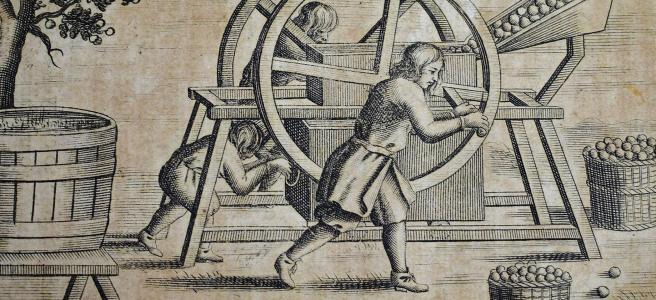
Dana Jalobeanu and Oana Matei (2022) Spiritual technologies: Cider Making and Natural Philosophy in Early Modern England, Nuncius, 1/2022, 315-345. doi: https://doi.org/10.1163/18253911-bja10021

Dana Jalobeanu, Dissecting nature ad vivum: Parts and Wholes in Francis Bacon’s Natural Philosophy, Bruniana & Campanelliana, 28/1, (2022), pp. 165-183. DOI: 10.19272/202204101010

Dana Jalobeanu, On bodies and their orbs: Kenelm Digby’s Use of a Metaphysics of Light to Ground an Experimental Physics, in Laura Georgescu, Han Thomas Andriaenssen, The Philosophy of Kenelm Digby, Springer, 2022, pp. 183-201, DOI 10.1007/978-3-030-99822-6_8

Oana Matei, “Particles, Universal Spirit and Seeds: John Evelyn’s Theory of Matter in Elysium Britannicum” in Charles T. Wolfe, Paolo Pecere, and Antonio Clericuzio (eds.), Mechanism, Life and Mind in Modern Natural Philosophy, Cham: Springer, 2022, pp. 49-66. DOI: https://doi.org/10.1007/978-3-031-07036-5, ISBN 978-3-031-07035-8, 978-3-031-07035-8; e-book ISBN 978-3-031-07036-5.

David Marshall Miller, Dana Jalobeanu (eds.), The Cambridge History of Philosophy of the Scientific Revolution, Cambridge University Press, 2022

Other papers

Dana Jalobeanu, Peter Anstey, Experimental natural history, in Jalobeanu and Miller, The Cambridge History of Philosophy of the Scientific Revolution, Cambridge, Cambridge University Press, 2022, 222-238, ISBN: 9781108420303, doi:10.1017/9781108333108.014 Cambridge history philosophy scientific revolution | Early modern philosophy | Cambridge University Press.

Dana Jalobeanu, Bacon’s Art of Discovery. In: Jalobeanu, D., Wolfe, C.T. (eds) Encyclopedia of Early Modern Philosophy and the Sciences. Cham: Springer, 2022. https://doi.org/10.1007/978-3-319-20791-9_632-1

Dana Jalobeanu, Baconianism and the Royal Society. In: Jalobeanu, D., Wolfe, C.T. (eds) Encyclopedia of Early Modern Philosophy and the Sciences. Springer, Cham, 2022, https://doi.org/10.1007/978-3-319-20791-9_631-1

Dana Jalobeanu, Baconian Natural and Experimental History. In: Jalobeanu, D., Wolfe, C.T. (eds) Encyclopedia of Early Modern Philosophy and the Sciences. Springer, Cham, 2022, https://doi.org/10.1007/978-3-319-31069-5_49

Dana Jalobeanu, Experientia Literata (Literate or Learned Experience). In: Jalobeanu, D., Wolfe, C.T. (eds) Encyclopedia of Early Modern Philosophy and the Sciences. Springer, Cham, 2022, https://doi.org/10.1007/978-3-319-31069-5_5

2021

Dana Jalobeanu, “On Metaphysics and Method, Or How to Read Francis Bacon’s Novum organum.” Epistemology & Philosophy of Science 58.3 (2021): pp. 98-119.

Dana Jalobeanu, Francis Bacon’s “Perceptive” Instruments, Early Science and Medicine25(6), (2021), pp. 594-617. doi: https://doi.org/10.1163/15733823-00256P04

Dana Jalobeanu, Superstition, Idolatry and the Advancement of Learning.: From the Brotherhood of Light to the Solomon’s House, in Lexicon Philosophicum: International Journal for the History of Texts and Ideas, 9 (2021) https://doi.org/10.19283/lph-20219.716 

Other papers

Dana Jalobeanu (2020). Experiments in the Making: Instruments and Forms of Quantification in Francis Bacon’s Historia Densi et RariEarly Science and Medicine25(4), 360-387. doi: https://doi.org/10.1163/15733823-00254P04

Dana Jalobeanu (2020), Enacting recipes: Francis Bacon and Giovan Battista Della Porta on technologies, experiments and processes of nature, Centaurus, 62 (3) 425-446. https://doi.org/10.1111/1600-0498.12334

Dana Jalobeanu and Oana Matei (2020), Treating plants and laboratories: A chemical history of vegetation in 17th century England, Centaurus, 62 (3) 542-561. https://doi.org/10.1111/1600-0498.12321

Corpus of texts

Since recipes are almost everywhere in early modern Europe, our project could have started with very different sets of textual corpuses. But for the past three years we have investigated a specific selection of texts belonging to the “Baconian tradition”. We have dealt with the following categories of texts:

  1. Books of recipes and commonplace books integrating ‘secrets; and recipes coming from the second edition of Giovanni Battista della Porta’s Magia naturalis.
    1. The notebooks of Hugh Plat (hosted by the British Library). Lawyer, philosopher and entrepreneur, with an interest in developing technologies and selling patents (in the late sixteenth century and the early seventeenth century). Hugh Platt is one of the key actors in the reception of Della Porta’s Magia naturalis (Mukherjee 2010, 2011) in England. Jalobeanu attempts to show that he was also a vehicle of transmission of ideas and recipes from Della Porta to Bacon and the Baconians of the seventeenth century. 
    2. The manuscripts of Henry Power. Natural philosopher, mathematician and experimenter, thorough Baconian and supporter of a certain brand of experimental philosophy. Henry Power left extensive manuscript records hosted by the British Library which were never subject to a thorough investigation. We have read through some of them and Grigore Vida and Dana Jalobeanu have transcribed two of the most important: a list of Power’s extensive collection of books and a commonplace book in which recipes and experiments from Della Porta are put together with experiments recorded by Francis Bacon, Kenelm Digby and other seventeenth century philosophers.
  2. The second cluster of texts relate to the reception, publication (of successive editions), translation and circulation of Francis Bacon’s Sylva Sylvarum in seventeenth century Europe. Jalobeanu has identified the ways in which the posthumous Sylva Sylvarum relates other Baconian manuscripts, especially those discovered at the end of the twentieth century in Paris and published in volume XIII of the Oxford Francis Bacon.
  3. A special attention was devoted to the “scientific” readers (and editors) of the two books, to the correspondence and manuscript work (and marginalia) they generated. We have perused the correspondences of Samuel Hartlib, Henry Oldenburg and Robert Boyle; and we have read several of John Evelyn’s manuscripts (see Matei 2022).
  4. Another series of texts is represented by the Accademia dei Lincei’s recipes on fossilia, especially Francesco Stelluti (and Federico Cesi)’s Trattato del Legno Fossile Minerale (1637) and Fabio Collona’s De Glossopetris Dissertatio (1616), and their reception by Baconian-informed readers, such as Robert Hooke (see Liciu 2023).

Arta baconiană a descoperirii – discuție de seminar

În acest seminar, vom discuta conceptul baconian de experientia literata, comparându-l cu ce am discutat data trecută despre noul organon (văzut drept sinonim pentru ”interpretarea naturii”). Cele două, ne zice Bacon, formează arta descoperiri/ invenției. Dacă noul organon se ocupă cu formularea de axiome pornind de la experimente (și găsirea de alte experimente pornind de la axiome etc.), ”experiența educată” se vrea o artă a experimentării ce nu formulează axiome. Bacon îi spune ”un fel de perspicacitate” (sagacity), și o mai numește ”vânătoarea lui Pan”.

Dar cum anume ar trebui să funcționeze această artă a experimentării? Bacon o imparte în diferite procedee experimentale, fiecare cu propriile subdiviziuni: variația experimentală (a materiei, a cauzei eficiente, a cantității), repetiția și extinderea experimentală (de ex., rachiul se obține dacă distilăm vin. Dar ce obținem dacă repetăm experimentul și distilăm rachiu?), mutarea (translation) experimentului în cadrul corpuslui de cunoaștere (de la cunoaștere din întâmplare la artă, de la o artă către o altă artă, dintr-o parte a unei arte către o altă parte a aceleiași arte), inversarea experimentului (un experiment făcut pornind de la contrariul altui experiment. De ex., dacă razele soarelui produc căldură atunci când converg printr-o lupă, atunci ce se întîmplă cu razele lunii?), forțarea la limită (compulsion) a experimentului (din ce punct magnetul nu mai poate atrage fierul?), găsirea de aplicații practice ale experimentrăii (application of experiment), experimentarea în conjuncție (coupling of experiments. Efecte ce nu pot fi produse din cauze izolate sunt produse prin conjuncția mai multor cauze), experimentarea pornind de la noroc (chances of experiment. Bacon ne spune că sunt cumva iraționale, pentru că sunt experimente pe care le încercăm pur și simplu fiindcă n-au mai fost încercate, fără alte indicii că am avea ceva mai mult aici. Aceste instanțe sunt un semn că programul baconian este unul cuprinzător, ce nu exclude nimic, în încercarea de împlinire a marilor idealuri experimentale– magnalia naturae – , precum prelungirea vieții, găsirea unui panaceu universal, transmutarea speciilor etc.). O parte dintre aceste instanțe, subliniază Bacon, ne duc, de fapt, mai aproape de noul organon. Ne vom întreba de ce.

Vom discuta și secțiunile despre puterea imaginației, precum și cele despre a doua parte a logicii (sau a artelor raționale), ”inventarea” argumentelor – o serie de procedee prin care nu ”inventăm” nimic nou, dar prin care ne pregătim pentru formularea și cumva detectarea noului. Un fel de ”digestie” a cunoașterii deja obținute, pentru a o pune într-o formă mai ”la îndemână” (readiness).

Câteva întrebări de avut în vedere:

– În ce sens se ocupă cele două ramuri ale artei descoperirii (descoperiea artelor și descoperiea argumentelor) cu descoperirea/invenția ? Sunt două sensuri diferite ? Care ar fi acestea ?

-Ce rol/ problemă presupune imaginația pentru Bacon ?

-De ce elimină Bacon silogismul în fizică ? De ce este el permis în alte ramuri ale cunoașterii, precum politica sau teologia ?

-De ce e Bacon împotriva inducției prin enumerație ?

-Ce este ”experienta educată” ? Prin ce diferă aceasta de noul organon (interpretarea naturii) ?

-De ce consideră Bacon că unele instanțe experimentale sunt mai aproape de noul organon decît de experientia literata ? (de ex. ”compulsion of experiment”).

Formarea principiilor – discuție de seminar

Cum anume obținem principiile unei scientia? Am văzut că, la Aristotel, principiile unui corpus de cunoaștere sunt date și nu pot fi demonstrate în interiorul disciplinei (deși pot fi demonstrate de către alta). O parte din principii sunt prime și sunt parte a metafizicii, însă altele sunt obținute printr-un proces ceva mai enigmatic, denumit epagoge în Analitica Secundă (inducția de tip Socratic, care pornește de la obiecte particulare, grupate în istorii naturale, și ajunge la concepte) (cf.McCaskey 2006, 2020). Pentru Descartes – am văzut la seminar –, conceptele se obțin printr-un soi de introspecție. Există două indicii că am găsit principiile adevărate (sunt clare și distincte, iar restul noțiunilor sunt construite pornind de la ele, și nu viceversa). Descartes susține că mai mulți filosofi au încercat să ofere cunoaștere prin descoperirea adevăratelor principii (numite și ”cauze prime”), dar că pănă la el nimeni n-a reușit.

Am văzut data trecută, în The Advancement of Learning, că Bacon este conștient că, din păcate, ordinea naturii nu este aceeași cu ordinea învățării (ceea ce l-ar putea distinge de Descartes, de pildă). Așa că problematizează îndelung cum anume am putea obține principii într-o lume dominată de idoli ai minții. În acest seminar, vom compara propunerea lui Bacon cu încă o perspectivă, cea a lui Newton, situându-i pe amândoi într-un context mai larg al discuției despre inductio în secolele XVII-XVIII.

Într-o interpretare, Bacon reînvie sensul inductio de formare conceptuală (concept formation) (McCaskey, op. cit.). Vom vedea cum anume putem obține o formă (exemplu ales de el e forma căldurii), prin pași succesivi. În Noul Organon, Bacon se ocupă de inductio prin trei tipuri de tabele (primul pas, cel al istoriei naturale experimentale, este tratat separat, într-un appendix la NO), tabelul prezenței (trecem instanțele unde vedem forma manifestându-se. În cazul căldurii, Bacon trece fel de fel de lucruri, de la razele soarelui la corpuri în descompunere), tabelul absenței (trecem instanțele asemnătoare cu primele, dar în care nu găsim căldură. Razele lunii, de pildă, sunt precum cele ale soarelui, doar că fără căldură),  tabelul aproximării (aici trecem instanțele ce uneori conțin căldură, alteori nu. Precum anotimpurile, de exemplu). De aici, Bacon extrage forma căldurii (căldura e mișcare în expansiune). Ne vom întreba care e forma logică din spatele acestui proces. MsCaskey susține că se obține ceva similar unei definiții prin gen proxim și diferență specifică, dar va trebui să ne uităm cu atenție la procedeul inductiv.

Newton poate fi înscris în același registru al inductio: principiile sunt rezultatul unei arte a descoperirii, denumite deducție din fenomene. Doar că nu prea e clar ce anume e deductiv aici. În cele două manuscrise pe care le vom discuta, Newton ne dă câteva exemple de principii, discutând și felul în care le-a obținut. Principiul omnipotenței divine (și al omniprezenței etc.) se obține din ”the frame of nature” (toate lucrurile sunt atât de perfect construite încât implică existența unui creator, ce are cunoaștere superioară despre natura luminii, a sunetului, culorilor etc.). Principiul impenetrabilității materiei se obține pornind de la ”the light of nature” (de discutat ce ar putea fi asta) combinată cu un fel de experiență cotidiană. Apoi lucrurile devin ceva mai complicate. Principiul  gravitației se obține prin maniera pe care Newton o descrie în celălalt manuscris. Prin analiză (procedeu construit prin analogie cu geometria), Newton trece din experiment în concluzie, ce generează alt experiment, ce va genera o altă concluzie, ce indică alt experiment etc. (construiește o artă a experimentării/descoperirii). Din experimente cu pendule (fenomene), Newton trece la cazul Pământului ce atrage luna și viceversa. La fel se întâmplă cu sateliții lui Jupiter, Saturn, și cometele. În acest punct Newton își consideră inducția completă. Obține principiul gravitației, în virtutea căruia face predicții. Ceva asemănător se petrece și cu principiul porozității corpurilor.

În mod interesant, Newton pare să fie împotriva filosofiei sistematice. Pentru a explica fenomenele, trebuie să folosim procedeele de analiză (formare a conceptelor) și sinteză  (explicare a fenomenelor prin descoperirea cauzelor). Dar aici intervine un vestit dicton Newtonian. Absența unei inducții complete duce la construcția de ipoteze, din care, susține Newton, nu pot rezulta decât ficțiuni. Newton critică încercările sistematizante și grăbite de a explica toate fenomenele. În manieră baconiană, e preferabil să pasăm generațiilor viitoare proiectele de cercetare de care nu avem timp să ne ocupăm.

Câteva întrebări de avut în vedere:

  1. Ce înțelege Bacon prin determinarea formei căldurii?
  2. Ce sunt tabelele baconiene? Ce fel de informație conțin?
  3. Ce este the first vintage?
  4. Ce este deducția din fenomene? (Newton) Care sunt etapele ei și cum funcționează?
  5. Cum obține Newton principiul porozității corpurilor?

Teoria științei la Francis Bacon. Discuție de seminar

În acest seminar, ne vom uita la două calupuri de texte:

  1. Un scurt fragment din AL despre clasificarea cunoașterii

Cele două cărți despre progresul cunoașterii (The Advancement of Learning, abreviat AL, cu varianta mult mai extinsă, De augmentis scientiarum), reprezintă prima parte a proiectului baconian numit Instauratio magna. Această primă parte se vrea un survey al statului științelor. Bacon examinează mai multe discipline, declarându-le cel mai adesea drept insuficient dezvoltate și drept indicative că o reformă ar fi binevenită.

În fragmentele pe care le discutăm, Bacon ne spune că fizica se ocupă de cercetarea cauzelor materială și eficientă, în timp ce metafizica de cauzele formale și finale. Observați limbajul aristotelic, pe care Bacon vrea să-l reformeze.  Metafizica nu mai este disciplina principiilor prime (acesta este Filosofia primă sau universală), ci disciplina care se ocupă cu descoperirea legilor fundamentale ale naturii, pe care Bacon le numește forme. Aceste forme sunt asociate conceptului de ”naturi simple”, ce compun procesele mai complicate ale naturii (în alte cuvinte, Bacon propune un program reducționist). Și nu sunt cu totul rupte de materie (ca exemplu, ne putem gândi al forma cantității – o proprietate abstractă, dar totși mereu vorbim de o cantitate a ceva. Însă asta ar fi de discutat. Alte exemple de forme ar fi densul, rarul, caldul, recele, greul, ușorul, tangibilul, pneumaticul etc.).

Mai mult decât atât, atât fizica, cât și metafizica, au câte două ramuri, una – să-i zicem – teoretică, iar cealaltă practică. Partea practică (Bacon o mai numește ”operativă”) a fizicii e mecanica, în timp ce partea practică a metafizicii e magia naturală. În mod interesant, Bacon susține (atât în AL cât și în alte scrieri) că odată descoperite adevăratele forme ale naturii, rezultatele practice vor fi pe măsură. De pildă, odată ce știm forma aurului, îl vom putea produce în laborator (asemena alchimiștilor, pe care  Bacon îi critică tocmai pentru că încearcă transmutarea aurului în absența cunoașterii formei lui). Termenul pentru aceasta este superinducere (”inducerea formei”, am spune noi).

Un lucru ciudat în aceste pasaje e că Bacon ne spune că matematica este tot parte din metafizică. De ce ar fi așa?

Aș vrea, de asemenea, să ne gândim cum am comenta exemplul următor, având în minte limbajul aristotelic și propunerea lui Bacon de reformă:

”A spune că firele de păr ale genelor sunt dispuse ca într-un gard, pentru a proteja privirea, sau că pielea creaturilor vii este astfel alcătuită pentru a le proteja de căldura sau de frigul excesiv, sau că oasele sunt structuri de rezistenţă pe care sunt construite corpurile crea turilor vii; sau că frunzele copacilor există pentru a proteja fructele, sau că norii există pentru a furniza apa care să ude pământul, sau că pământul este solid pentru a permite susţinerea şi adăpostirea creaturilor vii, şi alte explicaţii asemenea, sunt cele pe care le colectează şi le cercetează metafizica. Însă, în fizică, ele sunt irelevante”.

2. Scurte aforisme din partea I a Noului Organon

Noul Organon este partea a doua (neterminată) a Instauratio Magna. După examinarea diciplinelor pe care o vedem în AL, Bacon ne propune în Noul Organon – ceva ce a fost adesea văzut drept – propria metodologie a științei. Partea întâi este mai curând pars destruens, iar a a doua pars construens. În prima Bacon ne zice care ne sunt impedimentele în cunoaștere (semnificative sunt anticipările pripite pe care mintea umană tinde să le facă, ca într-o inducție incompletă. Bacon le numește chiar așa, anticipările naturii. De aici Bacon elaborează o psihologie a minții decăzute – doctrina idolilor, însoțită de fel de fel de discursuri despre secte filosofice). Partea a doua a NO conține o discuție interesantă despre arguments of hope (uneori invocate pe scurt și în prima parte a NO, arguments of hope sunt cazuri din istoria științei unde am reușit să obținem ceva cunoaștere chiar și în absența metodei corecte. Astfel de cazuri sunt folosite de Bacon drept indicii că nu suntem cu totul pierduți), după care urmează o expunere foarte complicată a celor 27 ”instanțe cu puteri speciale”, un fel de shortcut-uri către forme (pentru că Bacon e conștient că prin inducție prin enumerare nu putem obține cunoaștere certă), precum și un exemplu de cum să obținem o formă, forma căldurii. NO se termină cu o anexă metodologică despre cum să construim o istorie naturală, ce a fost adesea contrastată cu exemplele de istorie naturală pe care Bacon reușește să le scrie.

În acest seminar vom discuta câteva aforisme din partea întâi.

Af.5-31: vom discuta despre anticipări vs. interpretarea naturii, și despre noțiuni comune (aristotelice) ce trebuie reformate.

Af.63- 66: cele trei tipuri de filosofie falsă, școala sofiștilor (Aristotel, care forțează experiența să se potrivească Categoriilor lui), a empiricilor (chimiștii și Gilbert, ce au experimentat prea puțin) și a superstițioșilor (platonicienii, care au amestecat teologia și filosofia naturală, de unde au rezultat atât o filosofie naturală bazată pe imaginație, cât și o religie eretică) .

Af. 66-68: discutăm despre noțiuni comune (prost formate) și relația lor cu intelectul decăzut.

Aristotel și vocabularul științei

În acest seminar, ne vom ocupa, mai întâi, de concepția aristotelică a științei/ scientia, așa cum reiese aceasta din cartea a III-a a Metafizicii,. Mai apoi vom examina un exemplu de astfel de știință, fizica, focusându-ne pe conceptele de natură și de cauză (mai ales așa cum le găsim în cartea a II-a a Fizicii). Vom vedea că Aristotel fondează limbajul științei, din care fac parte concepte precum: cauze (patru tipuri, ce aduc în prim-plan întebearea ”de ce?”), substanță și accident (traducerile în românește, dar și în engleză, sunt multiple: context intrinsec și context al Ființelor (Cornea), real și accidental (Baumgarten), (essential) substance și attributes of substance (Ross), reality/ determiante și by virtue of occurance/ indeterminate (Charlton)), potențial și actual. După cum cred că se poate intui deja, lupta cu limbajul tradițional al științei nu e deloc ușoară. Dar cu acesta s-au războit modernii și, pentru a-i înțelege, de aici pornim și noi.

Vom avea în vedere următoarele întrebări:

  1. Cât feluri de știință pot exista pentru Aristotel? O știință a Ființei/ a substanței vs. o știință a principiilor
  2. Ce sunt principiile? În ce relație stau ele cu știința?
  3. Ce sunt principiile prime? Câte feluri de principii există pentru Aristotel?
  4. Care sunt cele patru tipuri de cauză? Ce le diferențiază? Ce au ele de-a face cu știința?
  5. Ce înțelege Aristotel prin ”natură”? Care este obiectul de studiu al fizicianului?
  6. Ce înțelege Aristotel prin întâmplare și prin spontaneitate (tr. Baumgarten)? Ce le diefrențiază pe cele două?  Ce rol  joacă cauzele accidentale în acest context? Cum se leagă acestea de știința fizicii?
  7. Care este obiectul științei fizicii? Bonus: se ocupă fizica și de lumea supralunară? De ce?
  8. Bonus: Ce înseamnă că există discipline matematice mai apropiate de fizică (optica, armonica, astronomia)? Matematician vs. fizician (193b22- 194a12).