În acest seminar, ne vom ocupa, mai întâi, de concepția aristotelică a științei/ scientia, așa cum reiese aceasta din cartea a III-a a Metafizicii,. Mai apoi vom examina un exemplu de astfel de știință, fizica, focusându-ne pe conceptele de natură și de cauză (mai ales așa cum le găsim în cartea a II-a a Fizicii). Vom vedea că Aristotel fondează limbajul științei, din care fac parte concepte precum: cauze (patru tipuri, ce aduc în prim-plan întebearea ”de ce?”), substanță și accident (traducerile în românește, dar și în engleză, sunt multiple: context intrinsec și context al Ființelor (Cornea), real și accidental (Baumgarten), (essential) substance și attributes of substance (Ross), reality/ determiante și by virtue of occurance/ indeterminate (Charlton)), potențial și actual. După cum cred că se poate intui deja, lupta cu limbajul tradițional al științei nu e deloc ușoară. Dar cu acesta s-au războit modernii și, pentru a-i înțelege, de aici pornim și noi.
Vom avea în vedere următoarele întrebări:
Cât feluri de știință pot exista pentru Aristotel? O știință a Ființei/ a substanței vs. o știință a principiilor
Ce sunt principiile? În ce relație stau ele cu știința?
Ce sunt principiile prime? Câte feluri de principii există pentru Aristotel?
Care sunt cele patru tipuri de cauză? Ce le diferențiază? Ce au ele de-a face cu știința?
Ce înțelege Aristotel prin ”natură”? Care este obiectul de studiu al fizicianului?
Ce înțelege Aristotel prin întâmplare și prin spontaneitate (tr. Baumgarten)? Ce le diefrențiază pe cele două? Ce rol joacă cauzele accidentale în acest context? Cum se leagă acestea de știința fizicii?
Care este obiectul științei fizicii? Bonus: se ocupă fizica și de lumea supralunară? De ce?
Bonus: Ce înseamnă că există discipline matematice mai apropiate de fizică (optica, armonica, astronomia)? Matematician vs. fizician (193b22- 194a12).
Teza canonică e că în secolul al XVII-lea are loc o „revoluție științifică” în urma căreia o filosofie naturală tradițională este înlocuită cu altceva, mult mai asemănător cu știința modernă. Acest altceva poartă, în limbajul epociii, numele de „noua filosofie”(naturală). Partizanii ei, de la generația sfârșitului de secol al XVI-lea (Giordano Bruno, Thomaso Campanella, Bernardino Telesio, Petrus Severinus) la generația de aur a secolului al XVII-lea (Francis Bacon, Rene Descartes, Galileo Galilei, Pierre Gassendi) sau la generația cu care a culminat revoluția științifică (Robert Hooke, Isaac Newton) își spuneau – sau erau numiți de alții – novatores. Ceea ce propuneau ei era o foarte declarată nouă filosofie care să înlocuiască filosofia tradițională, „de școală”. Aceasta din urmă era denumită „filosofie aristotelică” nu pentru că ar fi fost exclusiv bazată pe citirea și interpretarea scrierilor aristotelice ci pentru că descindea dintr-o mare sinteză medievală fondată pe Aristotel, sinteză care articulase chiar vocabularul filosofiei aristotelice. Înlocuirea filosofiei aristotelice nu era un lucru simplu. Ea presupunea o mare reformă a limbajului filosofic, o schimbare radicală a tipului de întrebări, a tipului de investigație a naturii etc.
Elementul de noutate, afirmația răspicată a noului, conștiința că produc o reformă sunt atât de vizibile în scrierile filosofilor modernității timpurii, încăt i-au determinat pe istoricii filosofiei să citească apariția modernității în cheia unui eveniment revoluționar.
Cum e cu putință ceva nou?
Johannes Kepler, Astronomia nova
Dacă vă gândiți puțin, noul este peste tot în secolul al XVII-lea. Johannes Kepler publică în 1604 un tratat-manifest despre „noua astronomie” . Titlul lui Kepler e programatic: Noua astronomie sau fizica celestă, o nouă știință a cerurilor care să conțină nu doar partea descriptivă, sau „salvarea fenomenelor” și și o știință a „cauzelor” care produc mișcările corpurilor cerești.
Francis Bacon publică în 1620 o altă scriere programatică și revoluționară (în raport cu cunoașterea moștenită) pe care o denumește Noul Organon (Noul Organon este de fapt partea a II-a a unui tratat cu un nume și mai revoluționar, Instauratio magna – Marea instaurare). După cum îi spune și titlul, Bacon promite, în Novum organum scientiarum o nouă logică post- sau anti-aristotelică (de fapt, o logică a descoperirii, a producerii științelor, adică o „nouă” și reformată teorie a științei – ce vrea Bacon nu e să scrie o nouă silogistică, ci doar să rescrie Analitica secundă).
Revoluție sau reformă?
O revoluție științifică, o schimbare radicală de paradigmă; dar și un eveniment programatic, conștientizat ca atare de către cei care l-au provocat: cum să înțelegem acest fenomen? Se vorbește despre „nașterea modernității” sau „formarea minții moderne” (un mod de a vorbi foarte popular la sfârșitul secolului trecut). Se vorbește, desigur, despre „revoluția științifică”, o știință înțeleasă în sens foarte larg și denumită, generic, „noua filosofie” (Dana Jalobeanu, Inventarea modernității, Capitolul 5). Dar noii filosofi nu se prea înțeleg între ei. Propunerile lor sunt adesea în conflict; între ei se nasc alianțe și controverse, multiple dezbateri. Peisajul filosofic al secolului al XVII-lea este divizat în școli și secte filosofice: cartezieni, gassendiști, neo-stoici, epicureici, neo-platoniști, Platoniștii de la Cambridge, sceptici…. iar mai târziu, newtonieni. La începutul secolului al XVIII-lea, un eseist briliant rezuma astfel situația:
A Frenchman who arrives in London, will find philosophy, like everything else, very much changed there. He had left the world a plenum, and he now finds it a vacuum. At Paris the universe is seen composed of vortices of subtile matter; but nothing like it is seen in London. In France, it is the pressure of the moon that causes the tides; but in England it is the sea that gravitates towards the moon; so that when you think that the moon should make it flood with us, those gentlemen fancy it should be ebb, which very unluckily cannot be proved. For to be able to do this, it is necessary the moon and the tides should have been inquired into at the very instant of the creation.
You will observe farther, that the sun, which in France is said to have nothing to do in the affair, comes in here for very near a quarter of its assistance. According to your Cartesians, everything is performed by an impulsion, of which we have very little notion; and according to Sir Isaac Newton, it is by an attraction, the cause of which is as much unknown to us. At Paris you imagine that the earth is shaped like a melon, or of an oblique figure; at London it has an oblate one. A Cartesian declares that light exists in the air; but a Newtonian asserts that it comes from the sun in six minutes and a half. The several operations of your chemistry are performed by acids, alkalies and subtile matter; but attraction prevails even in chemistry among the English.
The very essence of things is totally changed. You neither are agreed upon the definition of the soul, nor on that of matter. Descartes, as I observed in my last, maintains that the soul is the same thing with thought, and Mr. Locke has given a pretty good proof of the contrary.
Textul de mai sus aparține unei cărți de popularizare a noii filosofii. Iar autorul ei monsieur de Voltaire este el însuși un partizan declarat al newtonianismului. Însă Letters to the English, scrisorile-eseu cu care Voltaire popularizează noua filosofie, ne prezintă o mare diversitate de secte filosofice aflate în plin război peste care se ridică, depășindu-le, filosofia newtoniană. Însă nici măcar aceasta nu poate pune capăt războiului sau crizei filosofice. Criza, sectarianismul sunt astfel văzute ca o caracteristică a filosofiei secolului al XVII-lea. Nu prea seamănă a revoluție științifică, nu? E intereastant că într-una dintre cele mai interesante și mai importante cărți despre această perioadă scrise în prima parte a secolului XX, Edwin Arthur Burtt (Metaphysical fountations of modern science) remarcă ceva destul de similar:
One of the most curious and exasperating features of this whole magnificent movement is that none of its great representatives appears to have known with satisfying clarity just what he was doing or how he was doing it. (Burtt, Metaphysical foundations, p. 203)
Situația din secolul al XVII-lea seamănă mai curând (așa cum au remarcat mai mulți istorici ai filosofiei) cu situația generată de Reforma protestantă. Biserica catolică (aristotelianismul) este mai întâi atacată de un front comun grupat în spatele lui Luther: aceștia sunt reformatorii. Curând, însă, partidul reformatorilor se rupe: apar lutherani, calviniști, melanchthonieni etc. (așa cum în filosofie apar cartezienii, gassendiștii, baconienii, platonicienii etc.). Sectarianismul filosofic pare să fie o caracteristică a secolului al XVII-lea.
Dar oare doar a secolului al XVII-lea? Cum era înainte? În definitiv, filosofii s-au certat între ei întotdeanua. O întrebare interesantă ar fi cum se deosebesc școlile filosofice (aristotelicieni, platoniști) de sectele filosofice (cartezieni, gassendiști, newtonieni). Ce caracterizează o sectă?
Vom vedea pe parcursul acestui curs că filosofia secolului al XVII-lea este preocupată într-un mod foarte sistematic de un set de întrebări care nu mai reprezintă, azi, centrul preocupărilor noastre. Întrebări legate de cum se produce eroarea. Este cunoașterea posibilă? Putem ajunge la certitudine? Cum și de ce ne înșelăm? Ce ne înșeală? Cum se ajunge la sectarianism?
Limbajul folosit pentru a descrie eroare este adesea unul medical: se vorbește despre nebunie, căderea minții în stăpânirea pasiunilor, idolatrie. Bacon va folosi termenul de „idoli” în încercarea de a clasifica erorile. Și parcă nimeni nu este mai critic decât el cu privire la efectele nocive ale speculației (Jalobeanu 2018).
Revoluția științifică și istoriografiile modernității: istoria științei și istoria filosofiei
Teza revoluției științifice a fost foarte contestată în ultimii ani. Interesant, ea a început prin a fi contestată la sfârșitul secolului trecut de către istoricii științei; istoricii filosofiei au mai păstrat însă o vreme categoria de „revoluție științifică” pentru a marca marea transformare care are loc în secolul al XVII-lea. Dar s-ar putea ca acest lucru să se datoreze mai curând felului în care nu știm cum să explicăm mai bine marea transformare a secolului al XVII-lea. Dacă vă uitați în două cărți de referință: Cambridge History of Science (vol.III, despre sec. al XVII-lea) nu veți găsi nici o discuție în termeni de „revoluție”. Așa cum a fost remarcat adesea, termenul de „revoluție științifică” nici măcar nu apare în acesastă istorie de referință a științei moderne. Prin contrast, Cambridge History of Philosophy in the Seventeenth Century face adesea apel la această categorie istoriografică. (Luthy, 1999)
Înnoirea (sau decăderea) lumii
Kepler și Bacon nu sunt singurii care exploatează, în scrierile lor, valențele „noului”. Galileo publică în 1610 un mic text revoluționar în care ne povestește că a văzut lucruri noi, lucruri pe care nu le-a mai văzut nimeni niciodată: sateliții lui Jupiter, nenumărate stele din Calea Lactee, invizibile cu ochiul liber, munții și văile de pe lună. Totul, cu ajutorul unui „spion ocular” care avea să fie numit mai târziu telescop. La mijlocul secolului al XVII-lea, Robert Hooke și Antoine van Leuveenhoek afirmă că au descoperit o lume nouă „în mic” – creaturi invizibile, pe care microscopul ni le aduce în fața ochilor, structurile detaliate ale constituenților materiei etc.
Nu toți filosofii sunt entuziasmați în fața contemplării acestor lumi necunoscute. Există și cei înspăimântați de ele. Cei cărora li se pare că infinitul mare și infinitul mic detronează ființa umană din poziția sa centrală în economia creației. Există cei cărora infinitul le dă fiori (ca Pascal) sau cei care exhilarează în fața unei infinități de infinituri mari sau mici (ca Leibniz).
Cine sunt novatores?
Cine sunt cei care au produs, însă, această revoluție? Cine sunt toți acești novatores? De unii ați învățat la alte cursuri de istoria filosofiei, de alții nu – deși ar fi meritat. Primul curs va trece în revistă personajele cu care vom lucra în acest semestru. Vom vedea mai întâi cine erau partizanii filosofiei aristotelice cu care se războiau novatores, vom vedea apoi câteva portrete de novatores, întrebându-ne ce aveau ei în comun. Scopul acestui curs introductiv este să cartografieze teritoriul de care ne vom ocupa un semestru întreg.
Cursul se adresează studenților de la masteraul de Filosofie și gândire critică însă poate fi luat, în regim de curs opțional, de studenții de la oricare dintre masterele Facultății de filosofie (și de studenți de la alte mastere ale UB). Este un curs introductiv de filosofia științei, axat pe problema demarcației dintre știință și pseudo-științe. Scopul cursului este să discute diferitele formulări ale problemei demarcației, și diferitele soluții propuse pentru formularea unui criteriu de demarcație.
Va fi un curs online, desfășurat pe zoom. Pentru a comunica între noi vom folosi un drop-box în care voi încărca bibliografia pentru seminar, prezentările cursurilor, planul de curs și calendarul, fișele de evaluare etc. În același director, studenții își vor încărca temele scrise.
Cursul și seminarul vor avea loc în limba română, însă majoritatea bibliografiei de seminar este în limba engleză și vom avea, probabil, și invitați la curs vorbitori (doar) de engleză. Studenții pot preda temele scrise atât în limba română cât și în limba engleză.
Cursul va consta din prelegeri dar și discuții cu studenții pe marginea fiecăruia dintre subiectele expuse. Seminarul va avea mai multe componente: vom discuta pe texte distribuite dinainte, dar vom organiza și dezbateri. Pentru a pregăti o dezbatere, studenții vor avea de scris un „statement” (o luare de poziție) pro sau contra tezei enunțate. Aceste texte scrise vor trebui predate înainte de seminar și refăcute după ce dezbaterea a avut loc. În baza lor, studenții vor construi împreună niște articole de tipul „encyclopedia entry” (wikipedia) – învățând, astfel, care este diferența dintre un articol de tip „lucrare de referință” (dicționar, enciclopedie) și un articol personal sau un articol de cercetare.
Prezența la curs și la seminar este obligatorie (pentru a intra în examen studenții trebuie să fi fost prezenți și activi la minimum 8 cursuri și seminarii). Evaluarea se va face pe parcurs, pe mai multe componente: participare la seminar, teme scrise, examen oral (vezi mai jos).
Teme de curs și de seminar
Curs 1 (17 februarie): Știința și pseudo-științele în discursul public. Comunicare, popularizare, ideologie, manipulare.
Curs 2 (24 februarie): Precursori ai criteriului de demarcație. Scepticismul și problema criteriului
Texte pentru seminar:
Richard Popkin, The History of Scepticism from Savonarola to Bayle, Cap. 1
David K. Hecht, Pseudo-science and the pursuit for truth, in Kaufman & Kaufman, Pseudo-science: The conspiracy against science (în drop-box)
Cursul 3 (3 martie): Popper și criteriul de demarcație: o nouă filosofie a științei
Texte pentru seminar; Karl Popper, Science: Conjectures and Refutations, în Popper, Conjectures and refutations (atenție, e un text complex, luați-vă timp să-l citiți de mai multe ori)
Cursul 4 (10 martie): Demarcația și definirea științei. Cine sunt adversarii?
Texte pentru seminar:Thomas Nickles, The problem of demarcation: History and Future, in Piggliuci, Boudri, The Philosophy of Pseudo-Science.
Cursul 5 (17 martie): Cum demarcăm între știință și pseudo-știință? Studiu de caz: creaționismul științific
Curd & Cover, Philosophy of Science. Cap. I (articolele de Ruse și Laudan, introducerea și concluziile capitolului)
Dezbatere a moțiunii: Creaționismul științific este o pseudo-știință pe când darwinismul este științific (iar acest lucru poate fi demonstrat cu argumente).
Cursul 6 (24 martie) : Forme ale demarcației: normativitate versus practici, Criterii cumulative de demarcație
Feleppa, Robert, 1990. “Kuhn, Popper, and the Normative Problem of Demarcation”, pp. 140–155 in Patrick Grim (ed.) Philosophy of Science and the Occult, 2nd ed, Albany: State University of New York Press
Lakatos, I. Science and Pseudoscience, ibid, 20-27
Seminar: Dezbaterea moțiunii: astrologia este o pseudo-știință
Bibliografie pentru pregătirea dezbaterii: Thagard, P. Why Astrology is a Pseudo-science? In Curd, Cover, 27-38
Ioan Petru Culianu, Eros și Magie în Renaștere (capitolele 2-3)
Cursul 7 (31 martie): Criticii problemei demarcației
Laudan, Larry, 1983. “The demise of the demarcation problem”, pp. 111–127 in R.S. Cohan and L. Laudan (eds.), Physics, Philosophy, and Psychoanalysis, Dordrecht: Reidel.
Cursul 8 (7 aprilie): Apogeul și decăderea principiului de demarcație
Texte pentru seminar
Massimo Pigliucci, The premature obituary of the Demarcation Problem (Pigliucci, ed., The philosophy of pseudo-science).
Moțiunea pentru debate: Homeopatia este o pseudo-știință
Cursul 9 (14 aprilie) Principiul de demarcație și comunitatea: paradigme, practici și „the science wars”
Texte pentru seminar
Jeffrey Beal, Scientific Soundness and the Problem of Predatory Journals, in in Kaufman & Kaufman, Pseudo-science: The conspiracy against science (în drop-box)
James Robert Brown, Scenes from the Science Wars, cap. 1 din Who Rules in Science (în drop-box)
Debate: De data aceasta vom învăța să formulăm o moțiune. Pornim de la întrebarea: Unde tragem linia de demarcație între medicina științifică și medicina alternativă?
Cursul 10 (21 aprilie): De unde vine puterea de persuasiune a pseudo-științelor?
Pentru debate: Punți alunecoase în psihologie. Cazul hipnozei.
Cursul 11 (28 aprilie): Fizica teoretică și criteriul de demarcație: dincolo de experimente
Texte pentru seminar –studiu de caz – fuziunea la rece
Mallove, Eugene. “CSICOP:“Science Cops” at War with Cold Fusion.” Infinite Energy 4.23 (1999).
Pratkanis, Anthony R. “How to sell a pseudoscience.” Skeptical Inquirer 19.4 (1995): 19-25.
Cursul 12 (12 mai): Caracterul istoric al problemei demarcației
Texte pentru seminar -Studii de caz și dezbateri propuse pentru studenți (homeopatie, hipnoză, telepatie etc.)
Cursul 13 (19 mai): Pseudo-științe. Studii de caz și dezbateri pe teme propuse de studenți (pseudo-arheologie, astrologie etc.).
Evaluare:
Evaluarea va avea următoarele componente
Prezența la curs și seminar este o condiție pentru intrarea în examen (minimum 8 prezențe)
Activitatea la seminar: participarea la dezbateri, întrebări, susținerea unor puncte de vedere (se notează cu 0.5 puncte fiecare intervenție bună).
Pregătirea unui statement pentru dezbateri și rescrierea lui succesivă (după dezbatere) până când ajunge să fie bine argumentat
Redactarea unei recenzii la una dintre cărțile din bibliografie (max. 3000 de cuvinte). Sunt două categorii de cărți pe care le puteți recenza: cărți de popularizare și cărți de filosofia științei. Puteți alege o carte în funcție de nivelul instrucției voastre filosofice.
Materialele scrise se vor încărca în drop-box în folderele fiecăruia dintre voi. Recenziile care ajung în stadiul de texte publicabile vor fi încărcate pe blog (sau se pot publica pe Lets talk about books).
Deadline-uri
Pentru forma 1 a statement-ului argumentativ care exprimă poziția într-o dezbatere – cu o săptămână înainte de dezbatere, în seara zilei de marți (ora 22)
Pentru forma 1 a recenziei (pe care veți primi feed-back și pe care o veți rescrie) – 30 martie ora 22
Pentru forma intermediară (rescrisă) a recenziei – 11 mai ora 22
Pentru forma finală a recenziei: TBA
Bibliografie pentru seminar
Kaufman & Kaufman, Pseudo-science: The conspiracy against science (în drop-box)
Pigliucci, ed., The philosophy of pseudo-science (în drop-box)
Preluând titlul unei superbe colecții de poezii (Vasile Voiculescu, Sonetele închipuite ale lui Shakespeare) iată mai jos o selecție a celor mai bune dintre reconstrucțiile operate de studenții masteratului de Filosofie și gândire critică la cursul Arta de a pune întrebări. Ei au avut ca temă reconstituirea „scrisorilor lipsă” ale lui Lucilius către Seneca. Ce întrebări a pus Lucilius? Care au fost întrebările care au declanșat și susținut corespondența? Învățând să reconstruim întrebările lui Lucilius am deprins, împreună, „arta de a pune întrebări”.
Nu avem o colecție completă de scrisori – unele au ieșit mai bine, altele mai puțin bine – unele sunt mai clare și mai convingătoare, altele mai literare; unele sunt evocatoare, altele interogative. Fiecare dintre scrisorile de mai jos este, însă, rezultat al reflecției susținute și al rescrierii încăpățânate (unele au trecut prin 3-4 versiuni pentru a ajunge la ceea ce puteți citi mai jos).
Scrisoarea 3
(Ada Cepan)
Dragul meu Seneca,
Recunosc că ceea ce mi-ai scris m-a însuflețit și am să fac din sfaturile tale piatră de temelie a purtării mele de acum înainte. Eforturile îmi vor fi îndreptate către a atinge înțelepciunea, căci nesăbuit este acela care are la îndemână uneltele pentru a construi un templu dar nu le folosește.
I-am încredințat unui prieten scrisorile pentru tine. Când vă veți întâlni dar, rogu-te, nu vorbi cu el despre toate câte mă privesc pentru că nici eu însumi nu obișnuiesc. Îl iubesc, vorbim mult, însă niciodată nu mă dezgolesc până la ultimul secret în fața lui și în fața nimănui.
Prietenii îți sunt un dar. Poate chiar un dar de la zei. Îmi este clară importanța lor. Fără ei nici progresul nostru nu ar exista. Totuși, lumea aceasta este plină de primejdii și vorbim cu teama că orice spunem, oricât de neînsemnat sau nevinovat, poate să îți facă mult rău pentru că până și pereții parcă au urechi. Și asta mă duce la întrebările la care caut un răspuns la tine: Cum își alege un înțelept prieteniile? Cine îți poate fi prieten? Cum aleg să mă încred în prietenia cuiva? Cum știu că darurile pe care le primesc de la ei nu sunt otrăvite? Luminează-mi, Seneca, aceste gânduri și spune-mi, care este calea bună de urmat?
Primește această epistolă cu gândul meu de dor.
Al tău,
Lucilius
Scrisoarea 3
(Florin Blass)
Lucilius îl salută pe mentorul său Seneca,
Ce e prietenia Seneca? Ce înseamnă a fi prietenul cuiva? E vorba despre încredere? A avea încredere deplină în cineva? E vorba de iubire? E un cuvânt frumos prieten… a fi prieten; dar oare poți să pui întregul tău suflet în palmele cuiva, altul decât tine? Îi poți încredința oare cele mai lăuntrice și personale gânduri cuiva doar pentru un cuvânt frumos? Prieten… desigur, e legat de Prietenie, dar oare până la idee nu este foarte mult? Cum spunea Socrate? “Frumoase sunt toate cele frumoase prin Frumos”, așa și Prietenia. E o idee. Tot o idee abstractă și de neatins pentru noi, cum sunt Frumosul, Binele, Iubirea, Adevărul… avem acces doar la mici părți, incomplete și vagi a ceea ce înseamnă ele. Cuvântul prieten nu e diferit, cuvântul prieten nu înseamnă Prietenie! Atunci de ce să vreau să deschid unui simplu cuvânt, poarta sufletului meu? Nu sunt eu adevăratul meu prieten? Nu sunt eu cel ce mă cunoaște cel mai bine și cu care vorbesc când am nevoie? De ce aș mai avea nevoie de un altul, care poate se va sătura de mine cândva, care mă va putea trăda știindu-mi toate secretele. Sau poate va râde de mine cu alți “prieteni”, complici de-ai lui. Pot avea încredere în cineva, dar oare până unde merge asta? Uite, cel ce-ți aduce aceste scrisori are încrederea mea; i-am încredințat lui cuvintele acestea către tine, dar totuși nu vorbi cu el despre mine în felul în care ști a vorbi despre mine. Este prietenul meu, dar doar atât, cu această limită, nu văd de ce ar trebui să știe tot ce știu eu despre mine, cu ce m-ar ajuta? Prietenia e un ideal Seneca, ceva spre care tânjim toți, dar nu primim decât firimituri. Nu-i oare la fel și Iubirea, ruda ei? Nu ne face ea să suferim?
Rămâi cu bine
Letter 16
(Florin Ghiniță)
From Lucilius to Seneca
Greetings
Indeed, I did hear of that custom as well, that of adding to the opening words of a letter phrases such as “If you are doing well, that’s good; I am doing well myself,” and for a while, some time ago, I also used to write those opening words whenever I would send a letter. But, you see, for me, wishing for someone to be doing well implies both their physical and mental well-being. And while I do agree that a strong and healthy mind is very important, one cannot simply ignore their body and focus exclusively on it, for a frail body does not befit a great mind, as it would become more of a burden than if they took some time to ensure the well-being of their body, even if that would be exhaustive for the moment. Such physical exercises help in preventing the premature settlement of the pains that make home in a person’s body once enough time passes by, which also hinder the proper functioning of the mind in certain matters. Perhaps, indeed, a strict regimen would be of no use for every person, but at least some slight effort one makes in this regard is to be considered a necessity, followed, just as you have said, by study and respite. As for my voice, I truly believe to have exercised it more than it was the case, this being one of the many blessings of my profession, if I am to call it so. In what regards the present that you have given me in the last letter, I do agree that it is truly important for one to be grateful for the things they have, for it is the greed that might appear when people want more than they already have attained that makes them unhappy, and not the lack of the things they desire in itself. I shall thus do just as you have said, and I can but only hope that it will finally bring me the true feeling of fulfilment that everyone should desire to obtain.
And for the same purpose, dear friend, what else do you believe is of importance in ensuring one has a happy and fulfilled life and what steps shall one take in order to achieve that purpose and to better himself? I will promptly follow any indication that you give to me, do whatever you tell me and speak of the things that you say I shall bring into discussion with everyone willing to listen about the questions in matter. For it is the truth that my words are trying to convey to you, regarding those that I have written of so far, and it is your trust and help that they are asking for, regarding how I shall look at myself and react to what it is given to me to see. For I know not how I shall judge the progress I have made, if any at all, and whether the manner I tried to approach Philosophy has been the right one, and if so, I look forward to reaching the point where the self-improvement that comes from studying it will allow me to achieve wisdom and excellence of mind. Unless, of course, the Gods have decided a different fate for me. For what could I do to change what has been ordained to me, if fortune does not give me the chance to choose? With such constrains in mind, is it worth in the end to even begin going on this path? My mind grows weary due to these concerns, my friend. What I am convinced of is that happiness and wisdom do not reside in any sort of material wealth, and thus, it is an exercise of futility to dedicate oneself to obtaining such things. I shall, however, try to avoid any desire that presents itself as a source of happiness but which seems to never be able to reach an end point in terms of the things that it makes me desire.
I shall wait for your advice to reach me in our next written encounter, as it has done for so many times before.
Farewell.
Scrisoarea 19
(Florin Blass)
Lucilius salută pe Seneca,
Am obosit Seneca. Vorbeai de bătrânețe și împlinire. Suntem acolo. Am desăvârșit călătoria cea frumoasă, dar cu ce preț? Suntem iată, sus, pe vârful talazului, de unde ne vede oricine dorește să ridice ochii, exemple de urmat sau aspirații pentru ceilalți, dar prizonieri. Nu mai văd cale de întoarcere. Posibilitatea ascunderii în anonimat este pierdută pentru noi, pentru că amintirea strălucirii noastre va dăinui, iar ceea ce am făcut ne va aduce mereu în față din izvoarele memoriei. Așa se întâmplă când ești semnificativ, ieșit din pâcla ordinarului. Cum pot oare scăpa din această paradoxală strâmtoare ce pare altfel o încununare a virtuților urcată pe un piedestal imens? Cum oare pot redeveni Lucilius cel liniștit și seren? De-ar răsări din spuma mării o mică insulă între talazuri, acolo spiritul aș vrea să-mi ostoiesc. Dar el, aidoma unui vas semeț ce m-a purtat prin viață atât de sus, nu vrea să eșueze. Cum oare să cârmesc ?
Rămâi cu bine
Letter 34
Florin Ghiniță
From Lucilius to Seneca
Greetings
I can now see what you were referring to, in connection with the sayings of those of our school, that there are no words of advice of more value than others, but all rare equal parts of that knowledge which those who have reached it in the past have given to us, so that we can use it, spread it further and add to it ourselves, when our minds have gotten to the point where they have achieved wisdom. And for this reason, one should not merely pick one maxim or another, but look for the whole knowledge, for one should choose to sail downstream if they wish to get to the place where more waterways unite, not against the current, to reach only a small stream, especially when they find themselves close to the sea. And once they reach that place without any boundaries, there will be no more constraints that might have previously prevented them from attaining wisdom. But even so, can one claim to have any knowledge of something when they have not spent much time to try and fully understand it and then further spread it, not in the same way someone else before him wrote or said it, but in the way he himself understood the subject matter? And even then, one cannot claim to have reached wisdom if he cannot present his own point of view regarding things, for no knowledge is attained by simply agreeing to what someone else had said, but quite the opposite. The truth can only be found out through scrutiny and conflict between such ideas.
I do not mean to say that everything people have agreed upon must suddenly be doubted, but rather that one should look at the knowledge that is available to them and see whether there might be certain things they see in a different way, and follow that path to either prove or disprove their beliefs or assumptions, and also be grateful that they were gifted with the prior knowledge that they could analyse in such a manner, in the same way that I am grateful for the advice that you have offered me in helping me attain wisdom. For one who wanders the wilderness without following a path is likely to get lost. Less so, however, when one has a guide and a friend to help them in their trials. But why say more? When it comes to following the advice of a good person that desires nothing but my welfare and for whom I desire the same, I am willing all the time to do whatever I can to make sure I learn from the wise advice that he so selflessly provides me with, in my pursuit for wisdom and goodness. But is this the way in which a person who has achieved that state would see things? How would you consider such a person to be like? And in that regard, do you believe I am on the right path so far? And if not, what shall I do in order to persevere in my pursuit?
I shall wait for your advice and I hope, my dear friend, that this letter finds you in good health.
Farewell.
**Fragmentele scrise cu Italics sunt citate directe preluate din Scrisorile lui Seneca aferente scrisorilor redactate in cadrul exercitiului pe care ne-am propus sa il urmam.
Scrisoarea 55
Florin Blass
Lucilius salută pe Seneca,
Îmi spui tu, dragule Seneca, că cine stă pe culme va fi lovit și nu de trăznet doar, dar știm asta nu-i așa? O resimțim continuu, iar îndrăzneala și curajul să facem pașii înapoi pentru repaos nu ne lipsește căci spiritul ne este viguros. E greu însă acum să facem pașii pe care natura ne-a învățat să-i facem; i-am uitat. Am ocolit să-i facem și acum nu mai putem pentru că nu mai știm; la fel e și cu mersul pentru cel ce zace. Iar noi din cauza suficienței suferim; prea multul și prea plinul ne-au îndestulat și parcă n-am avut nevoie de alte căi, iar fără exercițiul greului și al furtunii, din prea mult bine, la urgie, precum limanul ne vom sfărâma. Acum drumul de întors e greu, căci urmele s-au șters, iar în anonimat, cum tu ai fost de acord, e imposibil pentru noi să ne ascundem, efect al devenirii noastre. Dar zi-mi Seneca, un pas în spate ca Vatia, de ce nu am putea să facem? Să ne retragem în toată gloria, în spatele zidurilor de virtute ce strălucesc și-or dăinui în ochii lor, poate găsim acolo tihna. Vorbesc de noi Seneca, nu de mine și cred c-ai observat, căci eu te întreb pe tine, iar tu îmi ești aidoma, ești gândul meu și acel prieten ce mă însoțește pretutindeni, cu care am depășit hotare și trepte am urcat.
Rămâi cu bine
Scrisoarea 87
(Alexandra Postolache)
Lucilius îl salută pe învățătorul său Seneca
Dragul meu învățător,
Nu de puține ori îmi vin în minte două întrebări esențiale pentru traiul nostru. Acestea ar fi: de ce existăm și cui îi suntem datori pentru existența lumii? Iar imediat mă întreb ce sau cine definește o viață morală? Conducătorul cetății, conducătorul familiei?
Am aceste întrebări și în fața ochilor și chiar dacă nu le găsesc răspunsul, știu că îmi face bine să le privesc.
Și dacă ne trăim viața după învățăturile unui conducător, în dorința de a urma virtutea, dragul meu Seneca, tu care ești atât de aproape de conducătorul nostru, spune-mi ce definește un conducător înțelept și moral? Este un înțelept care îi povățuiește pe cei slabi, care le arată ce este folositor și nefolositor, care se asigură că nu le lipsește nimic oamenilor?
Cum putem crea o viață armonioasă în cetate? Cum putem trăi cu toții împreună, astfel încât să ducem o viață morală și potrivnică naturii? Găsesc că fiecare dintre noi are rolul său, dar ce îl face pe un om să fie bun și iscusit în ale vieții sau să fie un adevărat înțelept? Iar în final, care este sălașul binelui și cine va fi cel care va cunoaște fericirea?
În așteptarea răspunsurilor tale, rămân să meditez asupra întrebărilor mele de început.
Al tău,
Lucilius
Scrisoarea 120
(Marinela Leca)
Lucilius il salută pe Seneca
Iata, bunul meu prieten, am desăvârșit călătoria! Pe calea ce-am ales sa o străbatem, spre culmile virtuții, cu greu si anevoie am răzbit! Am atins culmea, măreția acestei lumi se întinde la picioarele noastre, privim de sus tot ce se trece, în ochii altora, drept măreție umană. Mai sus de noi doar Zeul stapaneste.Drumul spre culmile virtuții este prăpăstios si plin de trudă, cărările sunt aspre si greu de străbatut. La răscruci stau gramadă plăcerile lumești, care ne ademenesc, ne cheamă la ele ; tot ce-i stralucitor si surazator: averile, plăcerile, frumusețea, belșugul, ambiția. Când bunăstarea te abate din drum, nu mai este cu putință să te opui. Cât de diferite sunt cele doua drumuri! Drumul celor ce coboară spre placere, te duce in jos, e lin, iar drumul celor ce urcă spre virtute, e greu, la deal, e aspru, anevoios si plin de umilință, se parcurge cu capul plecat. Trebuie să alegem calea cea grea, să fugim de ceea ce ne atrage, și să ne eîndreptăm spre ceea cene loveste. Ne este totul potrivnic la urcare: efortul, durerea, umilinta, rabdarea, sărăcia voioasă (despre care vorbește Epicur)..
Capătul drumului e sus, pe culme, acolo ajunge doar cel desăvârsit, stăpân pe viața lui, cel care nu și-a ocărât soarta și nu a întâmpinat întristat întâmplarile vieții ce i-au fost date, le-a îndurat pe toate ți nu s-a plâns de povara nenorocirilor, a fost mereu iîmpăcat cu sine, senin, ca o lumina . Nimic nu meritî mai mult admirația noastră decâtspiritul drept și bun, iar față de un spirit desăvârșit, nimic nu-i mai presus! Deasupra desăvârșirii se află doar judecata și intelectul zeului.
O viață închinată binelui este adevăratul rost al vieții noastre. Cualte cuvinte, putem spune ca ne naștem pentru a înfăptui binele pe drumul vietii. Dar, dacă este așa, ar însemna că binele acesta este în noi sau cu noi – într-o formă sau alta – de când venim pe lume. Ne este propriu, caracteristic. Sau nu? Cum am ajuns noi să cunoaștem binele?
Scrisoarea 120
(Raluca Safta)
Lucilius îl salută pe Seneca
Deunăzi, întorcându-mă dintr-o scurtă călătorie, am zărit la poarta cetății un om vrednic de muncă întinzând mâna după milostenie. Sub povața epistolei tale trecute, m-am întrebat dacă se cuvine un act de binefacere sau dacă, în așa împrejurare, ținerea în frâu a acestei porniri reprezintă mai degrabă săvârșirea binelui. Apoi am socotit că judecata mea poate a fost pripită, dacă sărmanul avea vreun beteșug pe care nu l-am observat? Mă întreb încă, Seneca, în ce fel deosebim binele de fapte care doar se confundă cu virtuțile, care în aparență fac bine, dar sunt înjositoare și nedemne?
Virtutea este binele desăvârșit, prin care se împlinește fericirea vieții[1], spui tu. Dar dragul meu prieten, mă întreb: binele și virtutea în ce fel au luat naștere? Darul filosofiei ne îndeamnă către cunoaștere și adevăr. E de folos, deci, să pătrundem întemeierea lor. Este oare valoarea morală o înzestrare naturală, pe care puțini sunt cei aleși să o trăiască? Îi este îngăduit vreunei părți a spiritului nostru să deslușească și să cultive binele într-un chip firesc?
Cercetez această temă cântărind dacă anumite fapte demne de laudă sunt îndeajuns pentru a deosebi caracterul omului virtuos. Am întâlnit ieri un general îndelung elogiat pentru curajul insuflat oastei lui și pentru purtarile sale ferme, dar binevoitoare față de soldați. Eu însumi nutream pentru el mare admirație și respect. Dar a folosit prilejul întâlnirii noastre numai pentru a se mândri cu pedepse de o strașnică și inutilă cruzime îndreptate împotriva sclavilor săi. Era de nerecunoscut. Se poate ca sufletul omului să arate într-un fel și moravurile lui într-altul? De bună seamă că binele desăvârșit nu e la îndemâna omului oarecare: ca generalul, el se leapădă de virtute după cum consideră că o cer împrejurările sau după propriile obiceiuri nesăbuite. Am hotărât, la rându-mi, să transpun pentru totdeauna în fapte acea statornicie cu mine însumi pe care vădit generalul nu o avea. Năzuind spre desăvârșire, socot că viața trăită în virtute îmi sporește puterea de a privi netulburat moartea.
Îngăduie-mi însă să zăbovesc asupra întrebării mele. Cum putem ști în ce fel am căpătat prima noțiune a binelui?
SVBEEV
Lucilius
[1] Scrisoarea 118 – paragraf 10, traducere Gheorghe Guțu
Voi discuta în acest scurt blogpost despre conceptul de puzzlesolving la Kuhn; îmi propun să-l clarific, exemplificând cu câteva paragrafe din Kuhn (The Structure of Scientific Revolutions), apoi voi discuta un exemplu pe care Kuhn ni-l oferă în acest sens. În primul rând, să vedem în ce sens folosește Kuhn termenul de ”puzzle”; acesta ne spune: “Puzzle-urile sunt, în întregimea înțelesului lor utilizat aici, acea categorie specifică de problemă care poate servi la testarea ingeniozității sau a deprinderii în cadrul unei soluții.”[1] . Rezolvarea unei probleme de cercetare presupune obținerea anticipatului într-un mod nou, iar acest lucru necesită integrarea multor ghicitori complexe. În acest sens îl numim pe cel care are succes un ”puzzle-solver” și tot în acest sens folosim conceptul de puzzle. Astfel îl legăm pe omul de știință, cel care face știință normală, de conceptul de puzzle-solving. Puzzle-solving-ul ar fi procesul prin care adeseori cel care practică știința normală trebuie să treacă.
Thomas Kuhn (1922-1996)
Un alt aspect pe care Kuhn îl consideră important atunci când vorbim de puzzle-uri este existența regulilor: acestea sunt indispensabile atunci când ne referim la un puzzle. Kuhn ne spune: “Dacă e ca o problemă să fie clasificată ca un puzzle, aceasta trebuie să fie caracterizată de mai mult decât o soluție asigurată. Trebuie, de asemenea, să fie și reguli care să limiteze atât natura soluțiilor acceptabile, cât și pasii prin care acestea să fie obținute.”[2]. În continuare el menționează că pentru a asemăna mai mult problemele din știința normală cu puzzle-uri, putem folosi termenul de ”regulă” într-un sens mai general: e suficient să privim regula ca pe un punct de vedere prestabilit, sau cum o mai numește el, ‚preconcepție’. Este asumată și demonstrată (după cum am arătat și eu aici) similaritatea dintre un puzzle și o problemă științifică. Așadar, puzzle-solving-ul, în sensul folosit de Kuhn, este procesul prin care majoritatea problemelor din știința normală își găsesc rezolvarea. Când vorbim de puzzle-solving, avem în vedere existența problemei, reguli de articulare a acesteia, soluție și nu în ultimul rând ‚punctul de vedere preexistent’ sau ‚preconcepția’ de care discutam mai sus.
Să vedem acum un exemplu de puzzle-solving pe care Kuhn ni-l oferă. Un astfel de caz exemplificat de Kuhn în care avem de-a face cu puzzle-solving-ul este cel al legilor proporțiilor fixe și determinate din chimie. Acesta ne detaliază: “În chimie, legea proporțiilor fixe și definite a avut pentru mult timp o putere similară- acestea fixând problema maselor atomice, delimitând rezultatele admisibile ale analizelor chimice și informând chimiștii în legătură cu ce sunt atomii, moleculele, compușii și soluțiile chimice.”[3]. În acest caz, problema științifică descrisă i-a forțat pe oamenii de știință să se folosească de conceptul de puzzle-solving pentru a avansa în sporirea cunoașterii referitoare la ea (de ex. problema masei atomice sau a diferiților compuși chimici).
Note bibliografice:
[1] Thomas Kuhn- The structure of scientific revolutions, c.4, p.36
[2] Thomas Kuhn- The structure of scientific revolutions, c.4, p.38
[3] Thomas Kuhn- The structure of Scientific Revolutions, c.4, p.40
În textul său, ”Falsificationism and the methodology of Scientific Research Programmes”, Lakatos distinge între trei tipuri de ”falsificaționism”: (1) cel ”dogmatic”-naturalist, (2) cel metodologic sau ”naiv” și (3) cel ”sofisticat”(acestea sunt numite altundeva Popper0, Popper1 și Popper2[1]). Cel dogmatic are impresia că te poți confrunta cu ”fapte brute”, din natură, care vor înclina balanța în cazul unui expriment crucial. Cel ”naiv” își dă seama că probele în favoarea unei teorii nu sunt fapte brute, și că observarea acestor probe e legată de o serie de decizii metodologice (cum rezolvăm problema bazei empirice? Ce anume din teorie este falsificat de observație? problemema cunoașterii de fundal – background knowledge)
Cel sofisticat păstrează atenția pentru problema deciziilor metodologice (dar fără a le rezolva pe toate!), însă discută în termeni de ”schimbări ale modului de a pune problema” (problemshifts). Aceste problemshifts pot fi progresive teoretic sau empiric (și sunt științifice dacă sunt cel puțin teoretic progresive), iar prin aceasta se înțelege că noua teorie asimilează elementele nerefutate din vechea teorie, iar pe lângă acestea produce noi observații empirice (deși, vom vedea la seminar, nu neapărat imediat) – i.e. are un ”exces” de conținut empiric față de vechea teorie – pe care finalmente de ”coroborează” (pentru a păstra un termen popperian). Dacă un problemshift încetează să mai producă conținut empiric, acesta devine ”degenerativ” (însă, după cum vom discuta la seminar, asta nu înseamnă că se retrage de pe scenă).
Pornind de la cel de-al treilea tip de falsificaționism, Lakatos își va construi o metodologie a proiectelor de cercetare (șiruri teoretice care împart același nucleu). Acestea conțin mai multe elemente: euristica negativă (cea care construiește nucleul dur și centura protectoare, formată din ipoteze auxiliare. Partea mai curând neinfirmabilă a unui program de cercetare), euristica pozitivă (omul de știință construiește un model teoretic, adesea făcând abstracție de conținutul empiric sau de ”anomaliile” care sunt puse pe masă. Aceasta definește ”variantele” infirmabile ale programului de cercetare), centura protectoare (ipotezele auxiliare ce protejează nucleul), respectiv nucleul dur (cel ce – în primă înstanță! – nu poate fi ținta unui modus tollens, dar poate fi eliminat pănă la urmă). Aceste elemente vin cu o serie interesantă de consecințe:
Asemeanea ”problemshift”-urilor, programele de cercetare pot fi teoretic progresive (propun noi modele teoretice) sau empiric progresive (conduc la noi observații empirice – sau pun observații mai vechi într-o lumină nouă), sau ambele. Tot asemenea problemshift-urilor, programele de cercetare pot deveni degenerative.
Experimentul crucial este redefinit. Acestea ne apar cel mai adesea drept micro-experimente cruciale, iar un factor decisiv îl are dimensiunea istroică a științei: un experiment ne apare drept crucial numai retrospectiv.
Există o perpetuă competiție între diferite programe de cercetare. Un program ”în cădere” (sau ”degenerativ”) se poate întoarce pe ringul de luptă după o perioadă mai lungă de timp.
În acest seminar, aș vrea să avem în vedere următoarele întrebări de fundal:
1. Mi se pare că uneori Lakatos pare să prefere demersul speculativ (sau de construcție a modelelor teoretice) în pofida muncii experimentale. Însă aștept să mă contraziceți. Ce înțelege Lakatos prin ”model”? Este Lakatos mai degrabă specualtiv sau mai curând apropiat de empiric?
2. Ce sunt euristicile? (O serie de reguli? Țin ele de logica descoperirii? De metodologie? Etc.)
3. Cum poate decurge ”lupta” dintre diferite programe de cercetare (putem identifica niște etape)? Poate nucleul dur fi infirmat în cele din urmă? Cum?
4. Cum redefineșe Lakatos noțiunea de ”raționalitate”? (De discutat cu ce am văzut până acum în Popper, Kuhn, Duhem – pe care, de altfel, îi și discută Lakatos în textul său)
5. Este Lakatos descriptiv sau normativ?
6. (Anticipând seminarul următor) Ce rol joacă istoria științei pentru Lakatos? Ce este o reconstrucție rațională?
[1] Însă Popper0 este mai curând un om de paie, construit de Ayer. Popper1 este Popper-ul de tinerețe, iar Popper2 este cel de bătrânețe.
În 1666, Newton observă un fenomen pe care l-am putea vedea drept o anomalie pentru teoriile optice ale vremii (pentru care un reprezentant important este Hooke): Newton observă că proiecția unei raze de lumină ce trece printr-un orificiu din fereastră și apoi printr-o prismă nu are forma acelui orificiu (circulară), ci o formă mai alungită, în care lungimea e cam de cinici ori mai mare decât lățimea. Acest fenomen este discutat de Newton într-o scrisoare către Societatea Regală, apărută în Philosophical Transactions.
Newton ia în considerare mai mulți factori care i-ar fi putut altera setup-ul experimental: grosimea lentilelor, forma imperfectă a acestora, sau chiar ipoteza în conformiate cu care lumina s-ar mișca circular. Însă niciunul din acești posibili factori nu par să explice fenomenul. Acest aspect îl încurajează pe Newton să construiască un experiment crucial, care ar trebui să ne elucideze natura luminii: Newton adaugă o a doua prismă și observă că fasciculele colorate de lumină nu se desfac mai departe în alte componente. De aici, Newton conchide că lumina albă e compusă din raze colorate, de refrangibilități diferite (”Light consists of Rays differently refrangible”), și că aceste raze nu sunt proprietăți ale luminii (apărute în urma refracției sau a reflexiei), ci constituenții ultimi ai acesteia (”Colours are not Qualifications of Light, derived from Refractions, or Reflections of natural Bodies […], but Original and connate properties, which in divers Rays are divers”).
Apud Lohne 1968, 181
Textul lui Newton poate fi împărțit în trei părți: mai întâi, o descriere a anomaliei și a setup-ului experimental ”crucial”. Mai apoi, ”doctrina” culorilor construită pe baza acestui experiment, ce conține 13 propoziții (care ne spun, de pildă, că fiecărui grad de refrangibilitate îi corespunde doar o singură culoare; că razele violet sunt cele mai refrangibile, iar cele roșii sunt cele mai puțin refrangibile; că, deși există un număr indefinit de astfel de raze, totuși între ele nu există o diferență esențială; ori că unele dintre aceste raze – mai apropiate pe spectrul culorilor- se pot amesteca, iar altele nu; și că dacă le amestecăm pe toate recompunem lumina ”albă”; sau că uneori nu vedem lumina ”albă” pentru că prisma pe care o folosim este ușor colorată etc.). Finalmente, Newton propune alte experimente în favoarea doctrinei culorilor.
Numai că această ”doctrină” este prezentată ca rezultând în urma unui experiment crucial. Iar acest lucru atrage atenția unui experimentator ce deja devenise, în epocă, parte a establishment-ului în ale opticii: Robert Hooke (Westfall 1963, Purrington 2009, ch 8). Într-un răspuns adresat tot Societății Regale, Hooke susține că ”teoria” lui Newton (după cum o numește acesta din urmă) este departe de a rezulta dintr-un experiment crucial, și că aceasta este mai degrabă o ”ipoteză” cu nimic mai certă decât alte ”ipoteze”, printre care și cea propuse de Hooke însuși: pentru el, lumina este indivizbilă, se propagă ondulatoriu, iar fenomenul culorilor este doar o aparență (”the Phantasm of Colour”) ce rezultă în urma indicilor de refracție diferiți pe care lumina îi întâlnește la contactul cu diferite suprafețe (deși uneori pare să fie ceva mai aproape de Newton și să spună că există totuși două culori fundamentale – roșu și albastru) (Micrographia 57-69, Purrington op. cit 136- 139). Cu alte cuvinte, Hooke respinge caracterul de experimentum crucis al demersului lui Newton, susținând că ambele teorii sunt coerente cu setup-ul experimental. Despre acest exemplu vom discuta mai îndelung la curs.
Natural History and Natural Philosophy in romanticism
The Romantic Period, defined approximately between 1790-1830, was an important timeframe for the formation of science as we know it today, with its rigorous method, continuous ramification of subject matter and cultural desideratum to use knowledge as a tool for life improvement. From Natural History through Natural Philosophy to Science, the complexity of this movement is suggested by the diversity of language styles, methodology, social approach and assumed purpose of each actor, specifically nature discourse.
Natural History, as a descriptive study, is rooted in field work and specimen collection, infused with literature and addressed to anyone interested. It is based on a more intimate approach to Nature, and on this rapport it builds its own aesthetic and philosophy. The field enjoyed an increased popularity in British society because it provided both functional results and artistic delights. As Catherine Ross noticed[1], the public was a crucial agent. Firstly, because it was composed by highly educated men, with diverse backgrounds, but still raised in the same classical spirit, reading the same books and attending the same lectures. Those are men formed to receive both types of knowledge, scientific and poetic. And because of this, whoever wanted to gain the public attention, had to resort to both receptacles. As the same author proves[2], the public switched from rich gentlemen with too much free time, to active men of society, pursuing knowledge to enhance the common good. In their work, intellectuals needed to keep in mind the market relevance of the results. For all these reasons, Davy had success with his lectures and Wordsworth had to give up poetry for a prolonged period of time. There was no place anymore for the isolated genius, and the demiurgic, hermetic arrogance prepared the fall for most creative enterprises. One example given by Ross to show this kind of compromise to public reception is Davy’s experiments, on which she notes that “this was not only scientific professionalism; it was a species of theater or performance art – small wonder that Davy captured not only the Romantic audiences’ intellectual attention but also their emotional and aesthetic interests in ways that few poets did.”
Natural Philosophy, on the other hand, is an older enterprise, tracing its origins back to Aristotle’s times. It has already a germ of scientific methodology, its language tends to be of a more realistic, experimental nature. Romantic period revived Francis Bacon and Sir Isaac Newton’s writing and further developed a language more precise, of a more mathematical style. Gravity law, corpuscular theory of light and other such theories were reborn to create a competing disciplinary structure out of natural philosophy by grounding it in mathematical principles and by formulating a distinct formal language for physics and astronomical knowledge.
One of the funny challenges of the epoch was that Natural Philosophy stands as a more valuable knowledge than Natural History. It required intensive training and further specialization, dedicated research spaces and tools, while the democratic knowledge of the other made it made accessible to the large public. Some practitioners of Natural History, in a popular display of irony, challenged this divide between theoretical and practical. For reference, we can take a look on the satire of “The philosophical puppet show”, or, Snip’s inauguration to the President’s Chair: “Preach not to me of theoretic art;/ I – like a whore – profess the practic part,” declares the Banks puppet in the play (Snip 1663:17)[3].
If we can talk today about a transition from Natural History to Natural Philosophy to Science, we can be prone to reductionism. We can also consider the development of instruments as the main agents of revolution, but that can still be classified as a simplistic view. The path taken in this essay is to look at this subtle shift of vision through the lenses of literature. The points to discuss are how the metaphorical discourse is employed in the popularization of science, how the scientific discoveries are engulfed in the literary imagery and, finally, how both science and literature divided their subject. If Newton’s mechanical philosophy gave birth to a lifeless nature, objective and governed by intrinsic laws, the parallel movement emphasized the subjective, the elusive self of the individual and of nature. This reaction was led by poets like Wordsworth, Coleridge, Byron, Shelley, Keats and Blake. One of the antinomies used in their work was that of nature. From Lake Poets perfection of nature and its inherent good, which stands out of human reach, through Blake’s fallen kingdom, where The Sick Rose will always betray her followers, we can sketch a map of nature’s image, and human place in it, swinging back and forth from one extreme to the other. On one hand there is W. Blake, who, in his poem “The Sick Rose”, gave a cruel imagery of natural element as “the invisible worm” who with “his dark secret love/Does thy life destroy.”[4]
And, on the opposing side, there is the Lake poet W. Wordsworth who, in the poem “I Wandered Lonely as a Cloud”, sings an ode to the eternal beauty of daffodils, which “flash upon that inward eye/Which is the bliss of solitude/And then my heart with pleasure fills,/And dances with the daffodils.” [5]The flower image is common to both, but where one sees a picture of dark conqueror of hearts, the other finds a delightful pleasurable counterpart.
Demeter with a scalpel and the science of building up paradise in the backyard
As the poem exemplified here, “The sensitive plant” implies the primary background of the garden, it is necessary to say a few words about garden imagery in the romantic time. As mentioned above, productivity and utility became the standard by which knowledge of nature was proven to be worthy of pursuing. In her work, Rachel Crawford[6] gave some directions by which the botanical taxonomy was rooted in every day’s life, with reference to the kitchen garden. Natural beauty took a complete turn, from the majestic and impersonal view of wild landscapes, to the confined, artificial space of the kitchen garden. The author’s analysis of kitchen garden manuals shows that they tend to unite didactic purposes with lyrical technique, in order to reach the public taste of the time. The functional aesthetic of the garden requires artifice, human control over natural phenomena. For the British public, nature was not a safe, familiar place for human subjectivity to project onto. By controlling nature, each gardener became a Deity and the garden a world by itself, or in Crawford’s words, “in calendar entries, especially, the gardener is portrayed as both regulator and genius of the garden. Under his tutelage, the garden is a product of artifice in which design, although everywhere apparent, produces sublime disorder.”[7]
Shelley and his theoretical discourse on art
Percy Bysshe Shelley, the subject of this essay, was also a child of this time. Science has been his long-lasting fascination, and this can be seen from the youngest year’s natural experiments to the imagery, motives and leading ideas of his late poems. James Lind was his mentor, and the personality having the most impact on his development. When the young Shelley met him, he was the idealized image of the man of science. Another important personality in his life was Erasmus Darwin, the grandfather of Charles Darwin. His work, „The temple of nature” or „The origin of society” was crucial to the poet, and this can be seen in Queen Mab’s subtitle “A poem with philosophical notes”, copying the same form of Darwin subtitle in “The Origin of Society: A Poem with Philosophical Notes”. His widely known ars poetica, Shelley’s essay “A defense of poetry” is a crucial work on the place and purpose of creative arts. Written as a response to T.L. Peacock’s article, “The four ages of poetry”, the text presents the role of the artist and its creative endeavors. For the scope of this essay, there are a few things of importance: Firstly, the discourse regarding the origin of art. Following Shelley’s metaphor, man is like a lyre on which external and internal factors print their impression. The principle active in human being, and, says Shelley, probably in all sentient being, transform this impression into harmonious melody. The result of this process is seen on different media, be it the pencil, the picture, the statue or a book of laws.
The poet is a Creator in the largest sense of the word, a mirror that does not reflect life as it is but dresses it into its highest form of harmony principle. Poetry enlarges the mind, “lifts the veil from the hidden beauty of the world, and makes familiar objects be as they were not familiar”[8] Art is, in this view, inherently human and, in the same time, superior to any individualistic and conscient endeavor. It is a principle of harmony, potent in humankind and awakened in those gifted. Secondly, the idea related to the usefulness of art. Poetry is of use for morality not by giving directives, but by allowing man to “go out of his own nature”. In this view, the motor of moral good is imagination, which poetry only enriches. “Neither the eye nor the mind can see itself, unless reflected upon that which resembles” And, thirdly, the antinomy between grossiere sciences and art. Art is an active force, a creative process, a synthesis, while science is a passive contemplation of the relation between thoughts, an analysis. In his words, “reason is to the imagination as the instrument to the agent, as the body to the spirit, as the shadow to the substance”. Pleasure is the purpose of a conscious being. He differentiates between two kinds of pleasure, one permanent and universal and another transitory and particular. Utility in this distinction is either “what strengthens and purifies the affections…and adds spirit to the senses” or merely “wants of our animal nature”. The latter’s advocates “an unmitigated exercise of the calculating faculty”. The former, in its definition, it needs to include a series of paradoxes by which “from an inexplicable defect of harmony in the constitution of human nature, the pain of the inferior is frequently connected with the pleasures of the superior portions of our being”. Though not necessarily linked with pain, as Shelley gives further examples of these pleasures in love and friendship, or “the ecstasy of the admiration of nature”. And only this sense is where utility should be pursued. What Shelley says further in the text about “mere reasoners” is related more to moral philosophy. As for mankind awakening, no philosophical analysis of society could induce the values created by art. As for the science improvement, Shelley’s view is that he was at the point where humanity “had eaten more than we can digest”. The improvement in mechanical arts needs a of the creative faculty of imagination.
When, in the last part, Shelley seems to sing an ode to poetry, it should be remembered that he calls upon the human faculty of getting out of itself and reshaping what one knows within the harmonic faculty. The process seems to be of a double cyclicity in relation to nature. It allows firstly a de-personalization of the self, then an almost alchemical transformation of, let’s say, scientist conclusions and mechanical knowledge, within the furnace of creative harmonic faculty. The result is the work of art, which only now has the potential to reach further. It is important to note that this process is out of reach for the will; one cannot decide to become a poet or to write poetry. And to lastly consider, in the light of what was told until now, his famous conclusion “Poets are the unknown legislators of the world”. As in the image sketched above, only the poet is capable of that degree of reality reconstruction upon the laws of human subjectivity. Considering the above, Shelley’s account of nature is one of a naturalized soul. The rapport between science and reality is one of a lowest degree than that between soul and reality or soul and science.
The Sensitive Plant or Mimosa Pudica
For the purpose of exemplification, the poem discussed further is “The Sensitive Plant”. By its scientific name mimosa pudica, it is a species known for closing its leaves as a response to physical stimuli. In addition to its response to physical stimuli, the leaves also droop in response to darkness and reopen with daylight, a phenomenon known as nyctinastic movement.[9] Going forward with the same flower motive which remained from Wordsworth and Blake, and its corresponding natural representation, I will take the chance to trace the routes of its botanical substratum and meaning.
In this poem Shelley describes mimosas in correlation to the human emotions. His conclusions are taken from Erasmus Darwin’s reflections on mimosas as a strange bridge between plant and animal kingdom. This parallel between natural world and human emotion is as old as poetry itself, but what is new in Shelley is that emotion stands as the link between human and nonhuman world. This idea is linked with his pantheistic view of poetry. As Nathan Cervo puts it [10]: “For Shelley, a “person” (whatever that is) achieves monistic rapport by sensitization, by stripping the insulation of matter, which includes the accretions of conventionalized Lockean psychological atomism, from the sheer electricity, the absolute “unweddedness” (the meaning of the Greek etymon for electricity), of the brain-soul dialectic. Among the aestheticized elect, this stripping or enucleating of the noumenal (archetypal) self always issues not in the triumph of time and its minions but in the apotheosis of the soul by way of Sentimental Naturalism” This shows that the path to the core of a “person” is to be reached by taking down layers of “matter” (physical as well as psychological Lockean one), removing the core/nucleus which can stay at the basis of the individuation principle, until it remains only the universal “soul”, the same substance shared with all natural beings. The sensitive plant is placed in the enclosed, artificial space of the garden, acting on its natural habit of enclosing its leaves on night and opening them to sun. The soul, so to speak, of the „companionless sensitive plant” is in a continuous wanting for love. The images of the other flowers in the garden is the one of femininity in blossom, a paradise of senses. The idea of unity emerges in the first part of the poem, where each plant „was interpenetrated/With the light and the odour its neighbour shed”. And, unlike the other flowers, the sensitive plant was deprived of any sensual qualities; all she has left is a desire for the Beautiful and a feeble, though unique, connection with nature cyclicity. The God of the garden, The Lady, is further introduced as a tendering force. When she appears, Shelley does not take her out, as an individuality, from the harmony of the Edenic garden, but he puts her inside it, on a preliminary deeper level, „like a sea-flower unfolded beneath the ocean”. The singularity and loneliness of the Lady makes her the counterpart of the Sensitive Plant. This tender gardener not only provides for the plants, but also shelters them from the ugliness and from all the „things of obscene and unlovely forms”.
As, once autumn came, The Lady died, nature died with her too. The garden changed and, once the course of natural transformation begins, the Edenic space became the feeding ground for all things the Gardener kept away. The wild vegetation is presented here as parasitic and monstrous. As the time passes and the spring returns, the sensitive plant remained but a skeleton prone to decay. Shelley’s view is also deeply rooted in the botanical knowledge of his time, as the same descriptors are used for the sensitive plant behavior. But he takes this knowledge a step further and infuse it with that creative principle described in “A defense…”. The same one that elevates the scientific knowledge from mere necessity and satisfaction of primal needs is used to give an account of perennial soul marching through time. The sensitive plant becomes not only a metaphor, but a counterpart, a mirror of poet’s place in nature and in time. The paradise-like image at the beginning creates a crescendo image of togetherness and harmony, only to be disrupted by the companionless Sensitive Plant. One of the paradoxes of aesthetic transmutation is that “the pain of the inferior is frequently connected with the pleasures of the superior portions of our being”. What has been done in poem is to change the view of death and decay from the purely descriptive natural phenomenon of nature into an almost serene sensation of perpetual immanent change. For the sake of comparison, let’s look on Erasmus Darwin’s description of mimosas: “Weak with nice sense, the chaste mimosa stands,/From each rude touch withdraws her timid hands;/Oft as light clouds o’erpass the Summer-glade,/Alarm’d she trembles at the moving shade;/And feels, alive through all her tender form,/The whisper’d murmurs of the gathering storm;/Shuts her sweet eye-lids to approaching night;/And hails with freshen’d charms the rising light./Veil’d, with gay decency and modest pride,/Slow to the mosque she moves, an eastern bride;/There her soft vows unceasing love record,/Queen of the bright seraglio of her Lord.—/So sinks or rises with the changeful hour/The liquid silver in its glassy tower./So turns the needle to the pole it loves,/With fine librations quivering, as it moves. “ – Erasmus Darwin, “The loves of the plants”.[11
We can notice, from both poems, that the plant personification is feminine. In this case an ephemeral, delicate and tender image. This is a recurrent motive, as plants were portrayed either as impersonating feminine desirable qualities, either as oversexualized feminine motives. By looking at the two texts on the same flower, one can see that both are infused in poetic language and metaphors. It is a characteristic of the Romantic period that, in order to proliferate the scientific knowledge (of botany in this example), the most accessible dress is the one of literature. We do not see in Darwin texts (nor was intended) the bleak taxonomy of contemporary botany. “The loves of plants” was a poem written by a botanist. On the other hand, “The Sensitive Plant”, still using the same river of botanical taxonomy provided by Natural History, enriches the meaning of the personification and introduces philosophical conclusions based on the passage of time and the rite of initiation. Another way to interpret the poem, in the light of what was previously said, is that, even in the controlled and artificial space of the garden, nature ultimately escapes humanity’s caring hand. As Shelley is attentive to notice, the aesthetic of the enclosed space is not a conquered beauty. For a short period, as short as a human life can be, The Gardener can participate and be included in the natural harmony and Edenic beauty of its creations. Once time expires and the decaying cycle begins, formal beauty of the senses vanishes. What remains is the perennial virtues of art: “For love, and beauty, and delight, /There is no death nor change: their might/Exceeds our organs, which endure/ No light, being themselves obscure.”
Bibliography:
1. Heringman, N. (Ed.). (2003). Romantic science: The literary forms of natural history. SUNY Press.
2. McCalman, I. (1999). An Oxford Companion to the Romantic Age. Oxford University Press.
3. Halsted, J. B. (1969). Percy Bysshe Shelley:“A Defence of Poetry”. In Romanticism (pp. 81-97). Palgrave Macmillan, London.
4. King-Hele, D. G. (1992). Shelley and science. Notes and records of the Royal Society of London, 46(2), 253-265.
5. Cervo, N. (1988). Hopkins’ the Caged Skylark and Shelley’s to a Skylark. The Explicator, 47(1), 16-20.
6. Levere, T. (2010). Richard Holmes. The Age of Wonder: How the Romantic Generation Discovered the Beauty and Terror of Science. xxi+ 525 pp., illus., index. New York: Pantheon Books, 2008.
6. Kelley, T. M. (2012). Clandestine marriage: Botany and romantic culture. JHU Press.
7. Ruston, S. (2013). Humphry Davy and the Sublime. In Creating Romanticism (pp. 132-174). Palgrave Macmillan, London.
8. Heringman, Noah. “Natural history in the romantic period.” A Concise Companion to the Romantic Age (2009): 141-167.
9. Heringman, N. (2004). “Peter Pindar,” Joseph Banks, and the Case Against Natural History. The Wordsworth Circle, 35(1), 21-30
10. Shelley, P. B. (2019). A defence of poetry and other essays. Good Press.
11. Darwin, E. (1806). The loves of the plants (Vol. 2). J. Johnson.
[1]“Twin Labourers and Heirs of the Same Hopes” The Professional Rivalry of Humphry Davy and William Wordsworth – Catherine E. Ross
What models are and what modeling is, are not easy questions to tackle down due, partly, to the fact that models are at the first glance overlapping with the concept of scientific theory. Are those really related in the sense that models and theories are on the same par? Or are models autonomous agents and we should be dismissive towards a theoretical-centered view? In this entry-article, I pursue rather the idea that models, whatever they are in regard with their fundamental ontology, are at the same time points of view or scientific perspectives about a physical phenomenon and, on the other hand, modeling is the locus of scientific activity which consists in the representational practice of depicting the physical phenomenon in the terms of a given perspective (Giere 2004, p.60). I call this latter approach “perspectival modeling”, borrowing the concept from Michela Massimi’s work, in order to restate Giere’s argument for models as perspectives (Massimi 2017, p.3). Modeling and models are intertwined in the sense that modeling is the scientific activity that relies on models (as vehicles of scientific representation).
In the first place, I consider various accounts of what models could be: either fictional, artifactual, abstract, or, rather, mathematical structures, or logic-linguistic propositions. Whatever models could be (here it comes the long disjunction of alternatives!), and whatever view one buys into, she should accept that models are also points of view about physical systems (target-systems). I argue henceforth that the perspectivist approach is consistent with (almost) any view about what models are. My guiding analogy would be, following Giere, the idea of a map that depicts the physical world (Giere 2004, pp.70-75). If models are perspectives, those are maps about the physical world. Within this view, we can conclude that models deliver perspectival, partial, and idealized scientific knowledge about phenomena (Massimi 2018, pp.166-167).
What models could be (a shortlist of much-debated approaches and examples):
Models as interpretations of theories (the Syntactic View): According to this approach, models are alternative interpretations to the abstract calculus of a theory. In turn, a theory is “an abstract calculus” and “a set of rules” that relate the calculus to “empirical content” (Nagel 1979, p.90). Models are, in other words, models for theories, or “are just the theories themselves” (French 2020, p.6). A classic example would be the billiard ball model of a gas, where the formal calculus (Newton’s laws of mechanics) is expressed not in terms of gas atoms, but in terms of a set of observable objects that enhance the scientific understanding (motion, momentum, mass) (French 2020, p.5). Models become mere psychological tools.
Models as mathematical structures (the Semantic View): Within this approach, models are extra-linguistic objects (contra the Syntactic View) since models can get multiple linguistic formulations.– models have, in this regard, a “linguistic independence” from the overarching theory (French 2020). Instead, under this construal, theories stand for “families of structures, its models” (van Fraassen 1980, p.64) – such that models are in fact mathematical structures. Take the previous example. The billiard ball model as a structure provides a representation of the gas atoms – the representation is an isomorphism (sharing the same structure) between the model and the physical system that is represented (the gas atoms).
Models as fictions: Models are on the same ontological par with fictions, meaning that there are no ontic differences between the billiard ball model, Hans Castorp, and The Magic Mountain (French 2020, pp.152-154). For instance, propositions regarding models are not literally true, but true only relative to the domain delineated by the model. Engaging with models in scientific practice, scientists are pretending ‘as if’ the models are real existing entities – being involved in a game of pretension. The entire game is “delineated by a kind of convention or principle of agreement” among scientists (French 2020, p.21).
Models as real abstract entities: Models are real entities, living in a Third World (basically, a realm of theories, models, artworks, paintings, literary fictions or music pieces) that is further distinguished from the First World (the physical world – the realm of physical entities) and the Second World (the mental world – made of mental states) (French 2020, pp.116-118). In this view, the process of building models is one of the discovery of a certain kind of entities that are out there in the world.
Models as metaphors: Another option is to define models as metaphors. In this view, metaphors are expressions involving interactions between a primary system and a secondary system (Hesse 1966, pp.158-159). If we take models as metaphors, the gas atoms (as the primary system) are conceived like billiard balls (as the secondary system). In this case, what hold between the former and the latter are multiple analogies of a certain kind. We assume from the onset that the primary and the secondary systems share some features (what is called positive analogy – for instance, kinetic properties), others properties are not shared (negative analogy – e.g. atoms are not made out of plastic), and there are also features about which I do not know (yet) if are shared (neutral analogy) (Hesse 1960, pp.8-9). Accordingly, a model could embody positive, negative, and neutral analogies with respect to the target-system.
Whatever alternative from (a) to (e) we pick out to define what a model is, models are going to provide scientific knowledge about the target-system similarly with how a map represents a specific delineated field. The latter thesis is an epistemic view about how scientific knowledge is generated within scientific practices – while our lists of approaches are, mainly, competing ontologies of models. Whether we decide that models are fictions, or abstract entities, or metaphors, models still work out as perspectives about the target-system. How? Let’s consider the following picture:
It depicts a partial subway map of Washington. The main information (knowledge) carried by the map is the topological ordering of stations (Giere 2004, p.74). What one resident of Washington can do with the subway map is “to know when one is at the stop before one’s desired destination” (Giere 2004, p.74). Regarding the target-system, the subway map is modeling Washington’s subway system from the point of view of how stations are ordered one after another. As a representation, Washington’s subway map is a one-to-one correspondence between the real order between stations and the mapped order between those. Also, many details or features are left out: we see no actual streets, the distance expressed in kilometers between stations is also lacking, no people in stations, or no subway schedule. Consequently, we can conclude that “every map reflects a perspective on the region mapped, a perspective built by the mapmakers” (Giere 2004, p.75). In our case, the Washington subway map reflects the perspective or the point of view of the relevant topological order. In the previous example, we can point out the central features of a map. Maps are partial since only some features of the place in question are subsequently represented (Giere 2004, pp.71-72). Maps are of limited accuracy because the relative distances on the map do not stand exactly for the relative distances on the ground (Giere 2004, p.72). Maps are idealized renderings of a physical system – as we have already seen, a lot of details from the ground are missing. (Giere 2004, p.72). Maps and mapmaking depend on conventions for interpretation, what and how maps represent is culturally dependent (Giere 2004, pp.74-75).
To make this latter point clear, Giere considers a Medieval map of the world. The outer circle refers to the world’s oceans, while the top part stands for Asia. The bottom left stands for Europe and the bottom right represents Africa. Without information (the relevant conventions) in place, we do not know “what a map is a map of” (Giere 2004, p.75)
Knowing better now what a map is and how it works, we can further extend the map case to models and modeling. Take the previous example of the billiard ball model. A perspectivist reading of it could say that the kinetic properties of small particles of matter are regarded from the point of view of the billiard ball. Within this perspective, atoms are depicted as bouncy balls that collide, exhibit momentum, are subject to change due to motion, are subject to the law of conservation of mass. The model is partial, it depicts certain features (the motion of the balls – the law of conservation) and no others (the material out of which the balls are made); the model is idealized, some features are neglected (certain friction forces due to air resistance); of limited accuracy (the relative size of the balls do not stand for the size of the atoms); and, finally, culturally dependent on certain conventions. In this regard, the billiard ball model is dependent upon Dalton’s atomic theory, which fits in the broader Newtonian classical mechanical view on how physical objects interact. Knowing all these particular details of the billiard ball model, we can certainly know what the model is a model of – what target-system is truly modeling. In other words, the billiard ball model reflects a perspective on the physical system that is mapped.
If models are like maps, then it follows that models are perspectives. How is in turn defined as perspectival modeling? The billiard ball model is a proper vehicle of representation for the gas atoms – it fixes up what features of the model correspond to which features of the targeted system. Models are designed such that elements of the model can be identified with features of the real world (Giere 2004, p.63). How modeling takes place? One way to obtain representations is to build one-to-correspondences that hold in certain respects (motion, the law of conservation in our toy example) but no others (size and the make-up material). By now, it is plausible to stress that representations are done not ex nihilo, or from almost any perspective, but the relevant models are representational tools withina specific perspective, namely the billiard ball model of gas atoms. If we are to abandon the billiard ball model and take into consideration the plum-cake model or Bohr’s model of the atom, we are gone to obtain different representations that are generated within other distinct perspectives. This train of thought shows nothing more than that scientific modeling is perspectival in the sense that it takes place from the point of view of a given scientific model.
Perspectival modeling provides understanding and insight of the target-system into question: how gas atoms behave as they do and why this behavior is subject to certain regularities (Bailer-Jones 2009, p.13). Moreover, modeling has an informational stage since there is a transfer of information from the physical system to the model – we are going to transfer the empirical information that we got directly to the billiard ball model. The next step is interpretation, where we take “the results of the derivation stage back to the target system” and interpret them in the light of our predictions about the gas atoms (French 2020, p.71).
Our detour to models as perspectives shows it does not presuppose beforehand what models are in regard to their fundamental ontology. Instead, the perspectivist reading puts models at work in scientific practices – explaining how scientists reason with models to generate knowledge. It is not a matter of ontology (not a fundamental ontological issue at least), but mostly a matter of knowledge acquisition or of epistemology (of science). We can live up with perspectivism regardless to which fundamental ontology of models we accept.
Seminar proposal: I would like to ask the students that are enrolled in the “Contemporary Trends in Philosophy of Science” course to read in advance the fourth chapter (“Scientific Theorizing”, pp.59-96) of Scientific Perspectivism as a starting point for our seminar discussion on models and modeling (15th December).
Works cited:
Bas C.Van Fraassen (1980), The Scientific Image, Oxford: Oxford Claredon Press.
Daniela Bailer-Jones (2009), Models in Philosophy of Science, Pittsburgh: University of Pittsburgh Press.
Ernest Nagel (1979), The Structure of Science, Indianapolis Cambridge: Hackett Company.
Mary Hesse (1966), Models and Analogies in Science, Indiana: Notre Dame Press
Pe 7 noiembrie 1919, ziarul londonez Times publica un articol cu titlul ”Revolution in Science” și subtitlurile ”New Theory of the Universe. Newtonian Ideas Overthrown”. Articolul ne spune că două din cele trei predicții făcute de noua teorie a lui Einstein au fost confirmate experimental. La capătul unui șir de investigații, expedițiile trimise să observe o eclipsă de Soare, la Sobral și Principe, s-au întors victorioase. Mai precis a doua din cele două expediții, cea coordonată de fizicianul Arthur Eddington, unul dintre primii discipoli englezi ai lui Einstein. Despre ce era vorba?
Coloana cea mai din dreapta anunță ”revoluția din știință”.
Conform teoriei lui Einstein, lumina care trece prin apropierea unui obiect celest masiv se curbează, obiectul având un efect de lentilă gravitațională. Dar, dacă este așa, atunci în timpul unei eclipse, stelele din vecinătatea Soarelui s-ar vedea deplasate din pozițiile lor „obișnuite”. Iată „consecința testabilă” a teoriei lui Einstein. Și iată ce confirmă expediția lui Eddington.
Și cum e cu Newton? Și teoria newtoniană ia în calcul că lumina poate fi acționată gravitațional la trecerea pe lângă un obiect masiv. Doar că în cazul lui Newton, valorile acestei deviații sunt mai mici, mult mai mici, decât cele prezise de teoria lui Einstein. Iar în 1919 avem o eclipsă de soare totală. Ce ocazie mai bună pentru astronomi decât să încerce testarea teoriei?
Cele două predicții, Einstein vs. Newton (apud. Eddington, Weighting Light)
Asta ne spune articolul din The Times. Că Eddington ar fi confirmat teoria lui Einstein și ar fi infirmat-o pe cea a lui Newton. Dar așa să stea lucrurile?
Un prim posibil răspuns: da
În eseul său, Conjecturi și infirmări, Popper ne vorbește despre Teoria Relativității ca de un bun exemplu de teorie științifică model, de teorie falsicabilă experimental. Einstein a făcut o predicție riscantă iar Eddington s-a dus să facă experimentul. Și experimentul a ieșit. Eddington a confirmat, pentru prima oară predicția făcută de Einstein și deci teoria acestuia. Predicția eisteiniană, pentru Popper, dă naștere unui experimentum crucis: expediția lui Eddington avea de judecat în mod crucial și de adjudecat în favoarea uneia dintre cele două teorii. Și a câștigat Einstein.
Un alt posibil răspuns: nu
În Fabulous science, John Waller propune imaginea unui Eddington impostor. Conform lui Waller, expedițiile din 1918-1919 nu au fost cu nimic mai de succes decât alte experimente similare, dar totuși considerate minore. Astfel, Waller se întreabă de ce comunitatea științifică a îmbrățișat atât de repede o dovadă experimentală șubredă. În acest sens, Waller reia o serie de critici invocate de istoricii Earman & Glymour la adresa clarității observațiilor lui Eddington:
Grade diferite de turbulență atmosferică;
Temperaturi ambientale diferite;
Diferența dintre 0.8 și 1.7 secunde de arc înseamnă a măsura mai puțin de grosimea unei monede de la aproximativ un kilometru depărtare;
O parte din aceste posibilie surse de eroare ar putea fi luate în considerare în contextul calcului ulterior, însă pentru aceasta avem nevoie de minimum 6 stele de a căror poziție să fim siguri, iar aceasta nu se întâmplă. Așadar, din nou, de ce consimte comunitatea științifică?
Pentru Waller, suntem departe de experimentum crucis. Mai mult decâtatât, Eddington a ”cosmetizat” datele experimentale, printr-o selecție nejustificată (bazată pe argumente ad hoc). Însă, consideră Waller, episodul Eddington e un alt tip de poveste; e o poveste despre taberele în care se împart oamenii de știință. Einstein a triumfat datorită unui mecanism apropiat de ce oferă astăzi serviciul de publicitate (cf. articolul de ziar, unde se anunță o revoluție în știință).
Alt răspuns: mai nuanțat— problema expertizei
Ben Almassi ne atenționează că ambele perspective de mai sunt simplifică prea mult. Miezul poveștii lui Eddington e, consideră Almassi, altundeva, și e mult mai nuanțat: problema limitelor expertizei și a încrederii în omul de știință. Eddington, ne arată Almassi, era o autoritate în privința Teoriei Relativității. Doar că epertiza lui (în TR) se intersectează cu alte tipuri de expertiză (în astronomie observațională, de pildă). Niciodată o astfel de expertiză nu va fi receptată într-un vacuum epistemic, de unde Almasi construiește noțiunea de expertiză parțială.
Almssi subliniază că, în Nature and Observatory (1919-1920) există mai multe încercări ale colegilor lui Eddington de a oferi explicații alternative pentru fenomenele observate:
Lodge: increased refractivity due to denser ether near the sun caused the starlight deflection.
Nevill: the region around the sun may deflect starlight for some other non-relativistic reason.
Silberstein: the displacements were not caused by gravity, but some irregular solar medium.
Anderson: uneven cooling of the earth’s upper atmosphere during the eclipse caused the observed starlight deflection.
Astfel, Almassi susține că succesul Teoriei Relativității este produsul unei intersecții din mai mult factori importanți din punct de vedere epistemic și a mai multor astfel de expertie parțiale.
Perspectiva lui Eddington
În Weighting Light, Eddington însuși ne arată problemele cu care s-au confruntat expedițiile pe care le-a supervizat. Uitați câteva fragmente grăitoare:
“In many cases one or other of the most essential stars was missing through cloud, and no use could be made of them; but one plate was found showing fairly good images of five stars, which were suitable for a determination. This was measured on the spot a few days after the eclipse in a micrometric measuring-machine. The problem was to determine how the apparent positions of the stars, affected by the sun’s gravitational field, compared with the normal positions on a photograph taken when the sun was out of the way. Normal photographs for comparison had been taken with the same telescope in England in January.”
“The results from this plate gave a definite displacement, in good accordance with Einstein’s theory and disagreeing with the Newtonian prediction. Although the material was very meagre compared with what had been hoped for, the writer (who it must be admitted was not altogether unbiassed) believed it convincing.”
A fost Eddington biased? Se pot justifica alegerile pe care le-a făcut? Are dreptate Popper și avem de-a face, până la urmă, cu un experiment crucial? Despre toate acestea discutăm miercuri, la seminar.

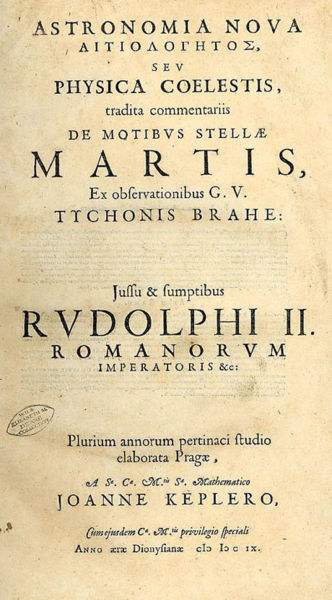


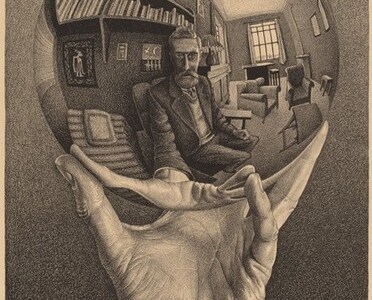


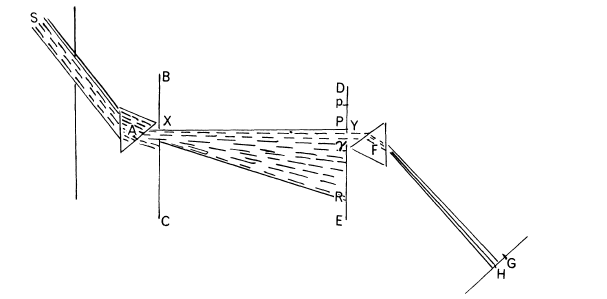



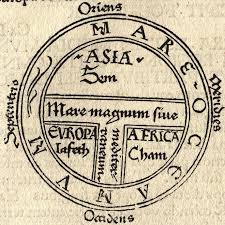

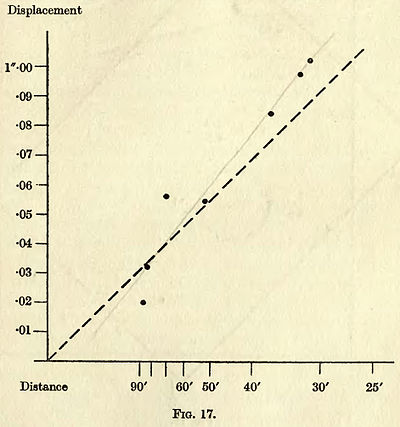

 Dana Jalobeanu